The Chemistry of Reading

It’s the best and absolute worst thing about reading.

You find a book that absorbs you from the very first page and devour it in a single sitting, ignoring ‘real life’ responsibilities like preparing for that important meeting or feeding your children. Day turns to night or night into day. You’re so immersed in the story you don’t realise your feet have turned blue from the cold.

Then you turn the last page and it’s over.  

If your immediate impulse is to hunt down the next book by the author, if you wail at discovering it is not yet written or not instantly downloadable as an e-book in the early hours of the morning, you are addicted. Captured, not just in mind but also in body.

What you might not realise – literary romantics and artistes should look away now – is that you might just have been played like a violin by the very best of commercially-oriented writers. Not that there’s anything wrong with that. After all, most of us write in order to be read.

If, like romance novelist Nikki Logan, you see writing as more craft than art, it seems perfectly logical to identify what presses all the right buttons in readers and then use this knowledge to write successful books.

Some writers intuitively understand what works. Others learn through years of trial and error. Unfortunately, these lessons are not easily shared. Logan has done a lot of research into the chemistry of reading and, in her workshop ‘Arousing Your Reader’ during Swancon36/Natcon50, her presentation of a biological perspective was refreshingly tangible.

Readers, Logan says, are vicarious sensation seekers. As humans, we are addicted to a certain level of arousal. Not just sexual arousal but the stimulation of all our senses.

Consciously and unconsciously, we seek out thoughts, images, food and actions that deliver the wonderful feelings generated by dopamine (alertness, energy) and norepinephrine (attention, motivation, pleasure, reward).

The interesting thing for writers is that a person’s chemical response to reading about an arousing experience is much the same as having it. Replicate that experience in your books and you’re away.

“If you have read a book in one gluttonous sitting, overnight to 4am even though you have an important meeting the next morning, your body is willing to go into a cognitive marathon,” Logan says. “It will start taking risks just to keep that experience alive.”

If a reader learns to associate reading a writer’s work with arousal and the feel-good  rush of serotonin that comes from having their expectations met, they are well on their way to being  ‘addicted’ to the author.

“It is kind of a mercenary approach, commercial fiction, unlike literary fiction, where you put your deepest, innermost thoughts out there and bugger everything else,” Logan says.

“You want to get the reader hooked on your books. A reader with a ‘you’ habit will buy every book you write.

“Train your readers to have a positive dopamine response to your name on a spine or in a radio interview and that can make the difference between them picking up your book and someone else’s book. That can make a difference in how your sales go or how the editor feels about your work as they pick it up.”

Recognising this biological effect is all well and good but if you want to take commercial advantage of it, you must learn the best way to attract a person’s attention and hold it with what Logan calls “a nice steady feed” of arousal.

And that is where the skill of the storyteller comes into play, knowing what to do with your characters, what action or emotion to emphasise and when, what kinds of settings make the most impact, the level of intellectual or emotional punch needed.

Logan has identified tools and approaches that make the most of readers’ natural motivation to maintain optimal levels of arousal and to stimulate their senses on multiple levels. Their application is a little too involved to go into here, but the good news is that Logan is working on an e-book setting it all out.

It is a fascinating area of research that does not remove the basic need to deliver a gripping and well-written story. Rather, Logan’s findings go some way to explaining why such stories work and why certain tools are employed in the most popular and lasting books.

 

Nikki Logan lives in Western Australia and is working on her 10th romance novel for Harlequin Enterprises. She is also writing an e-book about ‘The Chemistry of Reading’ .
Posted in Blogwax, Swancon36/Natcon50, The Buzz | Tagged , , , , , , , , , , , , , | 2 Comments

Teens Don’t Like Vampires – Just Ask Cassandra Clare

Guest post by Vanessa Monaghan

In 2004, Harry Potter still ruled the world of young adult fiction and publishing houses were cashing in. From Eragon to Inkheart, teens were devouring books about magic and not much else.

In New York City, aspiring author Cassandra Clare had a manuscript, an agent, and a problem. Rejections were flowing in from prospective publishers, and they were all saying the same thing – teens didn’t want to read about demon hunters and vampires.

“I wish I’d kept those rejections.” Clare told a packed audience at the Sydney Writer’s Festival to a round of appreciative laugher.

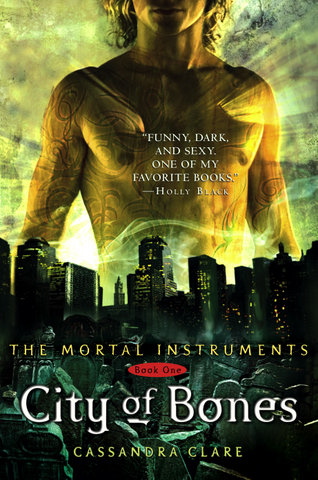
Fortunately, the vampire trend caught on, and Cassandra Clare went on to become the New York Times Best Selling author of The Mortal Instruments and The Infernal Devices series for young adults. With five books already published, and another four planned for release, she is touring Australian and New Zealand to share the secrets of her underworld.

Clare began her writing career at The Hollywood Reporter in Los Angeles. In between gossip emergencies, Clare worked on City of Bones, the first novel in The Mortal Instruments series.

“I was writing my novel, the person who sat behind me was writing a screenplay, and the guy in the front cubicle went on to become Perez Hilton,” she says.

After swearing to never write about Paris Hilton again, Clare moved to New York City and became a freelance writer. She also became friends with Holly Black, author of the Spiderwick Chronicles, after writing her a fan letter. It would prove to be a fortuitous relationship for Clare, as Black went on to recommend City of Bones to her agent, who loved it, and subsequently secured a publishing deal based on the first ten chapters.

In Sydney, Clare regaled the audience with details of her adventures with her partner in crime (Black) in the name of research. From driving around Manhattan with Black in the boot of her car (so she could accurately describe what it would feel like), to trespassing on New York’s Roosevelt Island and nearly being arrested, it’s clear that Clare loves what she does and never compromises on her writing.

A passion for urban exploration and an obsession with tattoos were Clare’s inspiration when she was developing The Mortal Instruments series.  After moving to New York, she began exploring the city’s secret corners, abandoned buildings and its underground. She knew she wanted to write a novel which treated the city as a wilderness, but she needed to create a world within that framework.

A visit to a friend’s tattoo parlour led her to research the use of runes in different cultures throughout history. She discovered that rune tattoos had often been used to protect warriors in battle.  From this she created the Shadowhunters, a secret race of tattooed Nephilim who protect humanity from demons and evil forces. With her setting and world in place, Clare then began to create her characters and the story she wanted to tell.

She confesses to being a neurotic plotter, who first develops an overarching plot for each series, and then works on micro-plots for each book. To keep track of her complicated storylines and characters (some of which appear in both series), she uses the writing program Scrivener. She also has a playlist for each of her books which she listens to repeatedly as she writes.

To separate her work and home life, Clare now shares an office in Massachusetts with Holly Black. She explains that this has been enormously beneficial to them both because it helps with the loneliness that is often part of a writer’s life, and also presents an opportunity to workshop ideas and to get immediate feedback.

When asked about her writing schedule, Clare says her personal goal is to write 2,500 words a day. This seems amazing considering the amount of time she spends online each day interacting with her fans on Twitter (http://twitter.com/cassieclare), Facebook (http://facebook.com/cassandraclare) and her blog (http://cassandraclare.com).

Clare’s social media strategy is a model for authors everywhere. Each month she posts excerpts from upcoming books, participates in live chats and answers questions about her books. It’s clear from listening to her that she genuinely enjoys engaging with her fans, and if the number of people queuing outside is any indication, that love goes both ways.

Vanessa Monaghan works full-time in communications, runs a family, is writing a novel and, in her spare time, blogs at www.motherism.com and www.anaussiemum.com.

Posted in Blogwax | Tagged , , , , , , , , , , , , | 3 Comments

Winner, ‘Hero’ challenge, and more..

Congratulations to Greg Doolan, winner of the 500-word ‘hero’ challenge with the poignant innocence of Mother’s Little Superhero.

Greg wins a copy of Stephen King’s On Writing: A Memoir of the Craft.

Thank you to all who entered this round. Many thanks also to our guest judge this month, Julie Hosking, editor of The West Magazine.

Julie was given only the titles and text of each entry, without author names, and agreed not to read the posted versions so was not aware of ‘likes’ or comments. See below for her thoughts on this round.

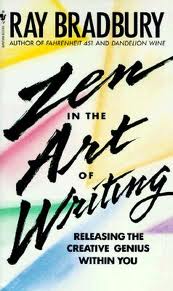
A reminder that the May 500-word challenge is currently open. Write up to 500 words around the theme ‘water’ and send them to waxings.blog@gmail.com by midnight, 4 June 2011 (AWST, GMT+8). The winner will receive a copy of Zen in the Art of Writing by Ray Bradbury.

Judge’s comments:

The stories were all very different and each had appeal but this won me over with its natural simplicity.

The author evokes an image of this boy and his strange yet somehow painfully ordinary world within a few short sentences. 

We can see Peter’s face, his home, his situation, and instantly empathise with his desire to create an alternative reality where superheroes, even in the guise of a small, alienated child, reign supreme.

I also like the sparse use of language. So much is conveyed, for example, about Peter’s situation in this one sentence: “Mother cried for weeks, but while Peter noticed his absence – the way his father had filled a room – beyond that, it didn’t bother him.”

And what’s not to love about a child seeing off an adult who is clearly less than desirable? Superhero indeed.

***

Death Anthology

One of the more interesting links on Twitter recently has been this call for submissions of stories up to 5000 words for inclusion in  Danse Macabre: Close Encounters with the Reaper.

The closing date for ideas is 1 June 2011 and deadline for the actual story, 15 December 2011. More details are available here.

If you want more of these kinds of links, faster, follow @waxings on Twitter and/or ‘like’ Waxings on Facebook, where I share these bits and pieces as soon as I spot them.

***

Latest Posts

We have three new short stories: My Future Husband Will Not Be Coming Home…Ever (Reflections of a Bru Woman) and The Story of Dung and Hot Stuff…Parents of Nước Hoa by J Gavin Allan, and The Path of Least Resistance by Mark Cunningham.

The authors would appreciate your constructive feedback. And, as always, I look forward to reading and posting your words.

Posted in 500-word challenge, Blogwax | 1 Comment

New 500-Word Challenge, Best Word Blog and more…

The ‘hero’ challenge has now closed and our guest judge is hard at work reading the entries. Good luck and gushy thanks to all who entered – we really appreciate your support in this establishment stage of the competition.

Didn’t enter the ‘hero’ round? The bad news is that you’ve missed out on the excellent On Writing: A Memoir of the Craft by Stephen King. The good news is that you have another chance at Waxings glory and a great book about writing.  

This month’s challenge is now open and the new theme is ‘water’ – so many possibilities!

Write up to 500 words around the theme and send them to waxings.blog@gmail.com by midnight, 4 June 2011 (AWST, GMT+8) for a chance to win Zen in the Art of Writing by Ray Bradbury.

Please, please, please help build up this comp by spreading the word – and a link to the Waxings 500-word challenge – to all your writing friends.

Recent Waxings

Welcome to new Waxers, Dawn Brink and J Gavin Allan.

Dawn has submitted three poems – Stars, Future and Grey – and Jaye has submitted the first chapter of her completed novel, A Very Sweet Boy.  Both are looking forward to your feedback.

While you’re at it, take a minute to browse through other stories and poems you haven’t read yet and leave some constructive comments.

To those who have already submitted, a reminder that there’s no limit to contributions. Please keep sending in your work – we love reading your words.

Best Australian Blogs

Congratulations to ‘Bothersome Words Editing and Writing Services’,  winner of the ‘words/writing’ category of the Sydney Writers Centre’s Best Australian Blogs Competition 2011. It’s a great site full of clear and useful advice about writing and deserves the win.

Other blogs worth visiting are the category finalists and honourable mentions:

A respectful tip of the hat to each of the above and a recommendation that you have a leisurely browse through these sites. Happy reading!

Posted in 500-word challenge, Blogwax | 2 Comments

Writing – A Poor Choice

Warning: Explicit Content  (Look away now if you wish to preserve dreams of rich and successful authorhood)

You know that romantic notion of the impoverished artist in a garret? Turns out it’s pretty close to the truth. And far from romantic.

Perth writer/reviewer Ian Nichols has done some number crunching, with help from the Australian Bureau of Statistics, and the results paint a depressing, if not unexpected, picture of writing incomes.

Here are some stark figures. In 2000-01:

  • 56% of writers earned less than $10,000 a year from their writing;
  • More than 60% of writers lived at or below the poverty line.

Yes, those last words were ‘poverty’ and ‘line’. The way Nichols tells it, even the modest aim of earning the average wage through writing is a pipe dream for all but a lucky few.

Presenting the paper Filthy Lucre: Writers and Money at Swancon 36/Natcon 50, Nichols said he wanted to know what JK Rowling had going for her that he didn’t – aside from a wand-wielding kid with a scar – so he did some research.

“The glowing examples mount before us: JK Rowling, the first literary billionaire; John Grisham, Tom Clancy; Dan Brown. A single breakthrough novel may be all it takes,” Nichols said. “Well, the dream may not be quite in accord with reality.

“I feel we can say with some degree of accuracy that writers don’t make much money. Short story writers make even less and poets have probably the highest word rate and the lowest income.”

He cited the ABS report Don’t Give Up Your Day Job (2001), which concluded that:

…only about one-fifth of all artists are likely to be able to meet their minimum income needs from their creative work alone, with only a little over one-third able to earn this amount from all arts work. Equally noteworthy is that around 40 per cent of artists are unable to meet their minimum income needs from all of the work they do both within and outside the arts.

So, out of those who supplemented their paltry earnings from writing with income from a ‘day job’, 40 per cent were still unable to pay their bills. Alarmingly – unless there’s been a massive turnaround in the last decade and anecdotal evidence suggests there hasn’t – the ABS revealed the trend was negative.    

Over the long term, it is apparent that in financial terms the relative disadvantage of artists compared to other occupations has worsened rather than improved over the last 15 years.

“While most people would acknowledge that they cannot walk up to a bassoon and produce music, or create a finished, competent painting when confronted by a blank canvas, oil paints and brushes, there seems to be a belief that writing is a skill that is wholly natural and that anyone can write,” Nichols said.

“This may be the reason that writers are so poorly paid and why there are so few job ads that demand skill at creative writing, although there are a few.

“When one considers that the (ABS) report indicates that writers spend more on supporting their writing habit than they make from it, one might wonder why they write at all.”

Nichols said there were some glimmers of financial hope. Tim Winton seemed to be doing well, as were a few other Australian writers. “Sally Morgan sold more than a quarter of a million copies of My Place and, at 10 per cent royalties, that is a nice piece of change,” he said.

But such success was rare. Here’s what Nichols worked out a writer had to do to earn less than the average wage for 2008, estimated by the ABS to be $60,000.

“As dedicated artists, we can’t really expect to make the average wage, so $50,000 as a yearly income seems fine. In fact, it’s the level at which the Australia Council has set Writers’ Fellowships,” he said.

“At 5c a word, professional rates, that’s 1,000,000 words to be sold, 200 short stories at 5000 words each. Roughly a story every two days, sold to a professional publication.”

Or, if you’re writing novels:

“Publishers don’t like to talk about how much they advance writers, but anecdotal evidence suggests that $5000 is a very good advance on royalties,” Nichols said. “That’s 10 novels a year.

“If the novelist relies on sales, they would have to sell just over 15,000 copies of their novel in a year.  There are few Australian novelists who do this.” 

Brace yourself for more depressing figures.

“Suppose one does have a book that becomes a best seller,” Nichols said. “In Australia, a book that sells 5000 copies would bring a smile to any publisher’s face, so let us, for argument’s sake, double that figure to 10,000 copies sold at a price of $32.95, which is typical for trade paperbacks.

“Ten per cent of $32.95 is $3.29.5. For 10,000 sales, that comes to $32,950 in royalties. If you could produce two of those a year, and there are some writers who do, you would be on a salary that is less than that of a classroom teacher.

“It is also rare for books to become best sellers. Again, it is difficult to obtain exact figures from publishers, but sales of less than 3000 are far more common than those of more than 3000. Some of our more well-known literary writers have never sold more than 5000 copies.”

So is it impossible for most writers to make a living from their chosen craft? Nichols was not devoid of hope. But it was clear that success required a lot of hard graft.

“Apart from the Rowling solution, there are a few things which seem to be useful,” Nichols said. It was important to realise that writing was business that involved marketing, finding support, diversification and production.

Marketing

“Writers are notoriously poor at marketing, which is why they employ agents,” Nichols said. “The jury is out on whether this is an effective strategy for all but established writers but it is a starting point.

“There are many websites and publications for writers which can tell you where to send your work for it to have the best chance of being accepted, what the payment rates are, response times etc. A little common sense is necessary as well. Women’s Weekly rarely accept horror stories.”

Finding support

“Finding support means finding grants and applying for them,” Nichols said. “It may take time away from your primary creative work, but it may also give you the means to engage in that same work without worrying about money for a couple of years.”

Grants were available from the Australia Council and WA Arts Council, among others. They were difficult to get but “you can’t win lotto if you don’t buy a ticket”.

Diversification

“Don’t limit yourself to a single form of writing or market,” Nichols said. “It’s quite easy to write a few hundred words about a trip you took and that can be marketed to newspapers, travel magazines etc. A review or article can be sold the same way. It’s a question of just doing what writers do, writing.”

Production

“Most of the successful writers I have known have treated it as a business and written constantly,” Nichols said. “Fred Pohl, for instance, one of the world’s most successful SF writers, writes every day without fail.” Self-publishing was an increasingly viable option.

“Finally, it is sometimes necessary to swallow one’s pride and write for the market that exists,” he said. “Paul Newman, in the 1963 film The Prize, played a writer who was about to be awarded the Nobel Prize. He admitted, in the film, that he had made his living for the last 10 years by writing mysteries for the paperback market. Our own George Johnston, author of My Brother Jack, was the best-selling crime novelist in Greece.”

At the end of his dispiriting presentation, Nichols urged writers to “take heart”. It was possible, even with low sales, low income and not earning out one’s advance, to make a profit for the publisher that, while meagre, was just enough to convince them to publish another of your works.

Ah, living the dream…


More from Swancon 36/Natcon 50 >


Posted in Blogwax, Swancon36/Natcon50, The Buzz | Tagged , , , , , , , , , , , , , | 10 Comments

The Structure of a Novel

In the very short time I have been festival-stalking authors and inflicting my newby questions on those nice enough to not run away, I have absorbed two very clear and consistent pieces of advice:

  1. If you want to write, just get on with it; and
  2. There are no rules.

Despite the ‘no rules’ rule, there is a plethora of guidelines available to those at a loss as to where to start, how to go on or to finish. And it seems many writers conform to a basic story structure.

At the Swancon36/Natcon50 workshop ‘The Structure of the Novel’, author JD Cregan set out this common structure with the admonition that “for every novel that is structured like this, the next novel is not going to have any of it”. At the very least, for the more ‘intuitive’ writers among us, it’s a useful tool for reflecting on where our stories might go.

Let’s start with the building blocks. Cregan says a novel is traditionally 300 to 400 pages, features three acts with a general theme and a sub-plot. Key factors are character, place and scenario.

Character

Character is defined by what people do and what people say. Everything else – whether they have a limp, their background – is characteristic.

Readers need to engage with the main character. They might not necessarily agree with the character, but they empathise with him or her and the circumstances they find themselves in. Cregan gives as examples, Hannibal Lecter and Macbeth. Both are characters readers do not necessarily approve of but empathise with because of their circumstances.

“What engagement creates is a bond with the reader,” Cregan says. “That is the single most important aspect of ensuring that someone goes on the journey with you.” Readers might empathise with characters that are marginalised, victimised, disadvantaged or something as simple as Harry Potter’s (initial) plight of being in conflict with the people he lives with.

Cregan says that, within this common structure, character must change from the beginning to the end of the story. For example, if, at the start, the main protagonist picked up a $100 note he found on the footpath and handed it to police, by the end, he would pocket the money, or vice versa.

Place

It is important to be authentic when creating the setting. For example, Cregan says lack of authenticity in location can happen when you write about a country you have never visited.

Aspects of setting include the period of time in which the story is set, the level of conflict at that time and the duration of the story.

Scenario

Cregan describes this as “the big what-if”. For example, what if a group of hobbits went on a quest to find a ring? The scenario needs to be strong enough to “grab the reader by the throat and never let them go”.

So you’ve got character, setting and scenario under control. From here, the common story structure goes something like this (I have no hope of replicating Cregan’s diagram):

  • Introduction/setting the scene – this usually takes up about a quarter of the novel
  • Inciting incident – this throws life out of balance for the main character/s and sets up an ‘object of desire’ in order to restore that balance.
  • Quest – the middle journey in which the character/s seek the ‘object of desire’. This usually takes about half of the novel. In this section, we see the forces lined up against the main protagonist, including internal (self-doubt, disability), external (friends, family, partners), nature, or organisations (police, mafia etc). There may also be a number of sub-plots.
  • Crisis/climax – this is decision time for the main character. An opportunity presents itself but it comes with great risk. A decision is made. The character comes into direct contact with the forces of antagonism. This and the resolution take the final quarter of the story.
  • Resolution – the end of the story usually involves:
  1. Homecoming or leave-taking;
  2. Rites of passage – birth, death or marriage; and/or
  3. Coming to realise or failing to realise.

Underlying this structure is something called the ‘controlling idea’. This idea is conveyed through the action of the novel but is never spelt out. For example, in a crime story, if the criminal is caught and led away in cuffs, the controlling idea might be something like ‘crime doesn’t pay’. Or if someone gets away with murder, the controlling idea might be ‘there’s no justice in this world’ or ‘crime does pay’.

“At the end, when you finish the novel and close it, there should be an aesthetic value and you should feel something,” Cregan says. “There should be a sense of ‘I knew that’. Not necessarily that you knew how it was going to happen.”

Of course, being rule-free, the writer can choose not to subscribe to a common ‘controlling idea’.

“If they don’t, we are left with a sense of uncomfortableness – and that is okay if that is the writer’s intention,” Cregan says. “It is like the discordant note in music. It is there because that is what the player wanted to play.”

Having set out this structure, Cregan gives a final piece of advice: “Rules are meant to be broken and they are broken all the time. This is not gospel.” But it is food for thought.


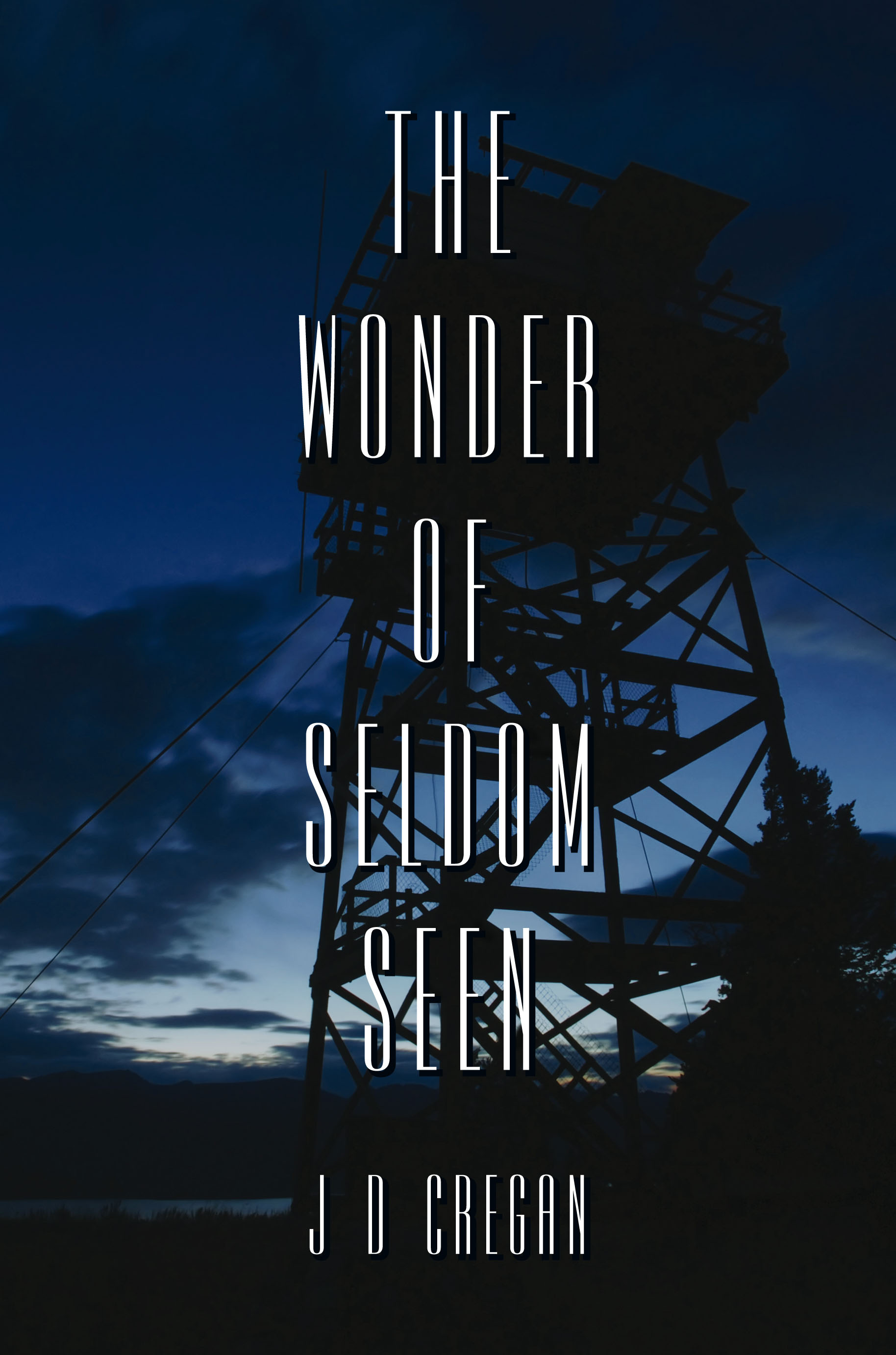
JD Cregan is a Western Australian author who released his first novel 98%pure in 2005. His most recent work, The Wonder of Seldom Seen will be published by University of Western Australia Publishing in June this year.

More from Swancon 36/Natcon 5o >

Posted in Blogwax, Swancon36/Natcon50, The Buzz | Tagged , , , , , , , , , , , | 3 Comments

Let’s Write About Sex

There isn’t a ‘throbbing member’ or ‘honey cave of love’ to be seen. But they are definitely on my mind during the ‘Writing Sizzling Sex Scenes’ workshop at Swancon 36/Natcon 50. And not just mine.

I haven’t written a story yet that requires a sex scene but attending this workshop was a no brainer (so to speak). Who doesn’t want to know what makes good sex?

So I find myself sitting in a brightly lit room with a marked absence of raunch and a posse of other wannabe sex-writers pondering the best names for body parts, the logistics of sex on a horse, in a moving coach and, disturbingly, in a coffin.

The workshop is led by Nicole Murphy, a paranormal romance writer who has put a lot of thought into what makes a good sex scene. She has a healthy sense of humour about the topic, which bodes well.

We start with the basic question of whether sex is even appropriate at this point of the story. Murphy says any scene needs to do at least one, preferably more, of the following:

  1. Reveal character
  2. Move the plot forward
  3. Help build setting

If it doesn’t do at least one of these, the sex is gratuitous. Once you decide sex is a good idea, there are a few things you can do to make it ‘pop’ and produce the desired reaction in the reader, be it arousal, fear, love or laughter.

In order to work, a sex scene needs four things:

  • Sensuality
  • Emotional intensity
  • Choreography
  • Language

Sensuality

It’s important to describe the sensual side of the sex, not just the technical.

Murphy suggests we think about our most memorable sexual encounters. Perhaps it followed an entire date experience of meal, flowers, dancing etc. Or maybe a new negligee got things going.

“It could be the moments that work for you is when you have candles and the feel of skin, or clothing being, or not being, removed,” she says. “Or smells. A lot of us would be able to say that the person we chose smelt right.”

“Sometimes, when we are writing scenes, we can lose track of that sensuality that comes through.”

Emotional intensity

Murphy hands out some printed extracts to demonstrate her point about emotional intensity. The first is an original draft of a sex scene from her most recent book. It is explicit and portrays a fair whack of lustful one-on-one. But it just isn’t…sexy.

“I realised that what was wrong was we didn’t know how they were feeling about it,” she says.

In the rewrite, description of the same physical actions has been interspersed with the female character’s internal dialogue. It isn’t hearts-and-flowers stuff but reveals her emotional reaction to what is going on. For me, it elevates both relatability and heat in the scene.

Another extract, by another author, describes the first meeting of former lovers after an extended separation.  Physically, the characters do not so much as hold hands. But the sexual chemistry on the page, conveyed through one of the character’s reactions and internal dialogue, is stirring.

“Emotions just make sex so much better,” Murphy says.  

Choreography

To me, this is the most interesting, if obvious, point: make the sex physically possible.

If writing a Regency romance, remember the characters have to negotiate swathes of voluminous skirting. Think about the logistics of sex in a moving coach – angles, limb placement.

As an example of logistical failure, Murphy provides an extract from an unnamed author. The piece is ridiculous for the sheer improbability of the characters’ behaviour in the circumstances, let alone the impossibility of the sex as described.

A man and a woman are kidnapped from their bed and find themselves transported within a closed coffin to a mystery destination. They fear they will be buried alive. When movement stops and the kidnappers apparently depart, the woman discovers the coffin lid can be removed. Before she can leap out, the man pulls the lid back over the coffin saying they need to develop strategy.

At this point, they are sitting up in the closed coffin. Within seconds, the man has grabbed the woman and “impaled” her on his apparently ever-present erection in what becomes an enthusiastic and mutual celebration of life.

As Murphy says, the author has worked on the emotional intensity (a little too much if you ask me) and the sexuality could do with a little more. But it’s the choreography that kills it.

Language

With the blurring of the line between romance and erotica, the use of certain types of language in each genre is becoming less prescriptive, Murphy says.  Previously, they were distinguished by more flowery terms in romance and ‘real’ terms in erotica.

“Nowadays, it (the distinction) is about the place of sex within the plot rather than the language,” she says. “My sex scenes are quite explicit.”

The real problem with language, particularly in the worst examples of romantic fiction, is the use of ‘purple prose’ that reinforces pre-conceived notions about the genre. Then there is simply bad description.

The Bad Sex Awards are awarded each year for the world’s worst sex scene in the English language. In 2008, one of the finalists, Kathy Lette, described a woman’s breasts as “jutting like mountains”. Murphy has read worse – a story in which a woman’s vagina was compared to a horse’s mouth.

“To me, when I’m writing, I worry less about the words than I do just getting it down. But at the end of the day, you need to stop and consider,” she says.

Murphy does not have an issue with using the proper terms for body parts but her female characters have varying degrees of comfort with their sexuality, which is reflected in the words they use. For example, one would say ‘penis’ while another is more likely to say ‘cock’.

“It is all about characterisation for me and it is all about the words that the characters would use. Characters guide you through so much of this stuff if you actually step back and let them.”

There aren’t any ‘throbbing members’ in Murphy’s writing but some clichéd terms, like ‘explosion’ for orgasm, are clichés for a reason, she says. They work. The bottom line is to avoid words that might throw a reader out of the story.

“All this is aiming to keep the reader there in the story with the characters,” Murphy says. “The moment you throw them out, they may come back in, they may not. But there are so many other books out there.”

So the lesson for the day is this: sex is better when it feels good, when there’s an emotional connection, no stupid words to break the mood and, most importantly, when it’s possible.


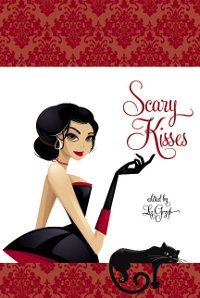
Nicole R Murphy is an author based in Canberra. She is a former teacher and journalist, has worked as an editor in the speculative fiction arena and is extremely active in fandom.  Her most recent  published work is a short story in the paranormal romance anthology, Scary Kisses (Ticonderoga Publishing).

More from Swancon 36/Natcon 50 >

Posted in Blogwax, Swancon36/Natcon50, The Buzz | Tagged , , , , , , , , , , | 3 Comments

Finishing The Story

You get a great idea, throw yourself at the keyboard and tap away enthusiastically. The characters, action and dialogue flow quickly through your fingertips, living and breathing on the screen almost before you are aware of them.  

That first rush of inspiration might last a few hours, a few days. If the literary gods are well disposed, the story might write itself for a good couple of weeks. Then the tapping slows. And stops.

What now? There’s no ending – perhaps not even a middle. You have absolutely no idea where to go. The screen, rather unhelpfully, returns your blank stare.

This has happened to Kaaron Warren dozens of times. The science fiction, fantasy and horror author has a filing cabinet full of unfinished stories – one page, two pages, four.  But the youngest of those neglected stories is 20 years old. These days, she finishes them.

At yesterday’s Swancon 36/Natcon 50 workshop ‘Finishing the Story’, Warren outlined her no-nonsense process with such confidence that it seemed inconceivable for a story to be left incomplete at the end.

I’ll be giving the process a go with my long-abandoned start ‘The Sensible One’ and will let you know how it works out. In the meantime, here’s a summary of how to go about ‘finishing the story’, according to Kaaron Warren.

There are three main parts to the process:

1)      Physically working your way to the end
2)      Figuring out the end
3)      Polishing

Work your way to the end

Don’t fuss around perfecting the first draft, just get on with it.

“This can be really hard but the most important thing about it is just to finish it and not be too careful in the first draft,” says Warren. “Write dot points in the middle. Skip bits. Get the skeleton down. Write ‘check this’ or ‘research that’. If you don’t know how to end it, put ‘write end’.

“This draft is you putting your brain on the page and no-one else will ever see it. I have dot points and question marks and arrows. I don’t want to be restrained by writing the perfect sentence or paragraph. Get it down and then start fiddling with the words.”

Figure out the end

Many writers struggle with an ending because they are searching for a twist, a way to surprise the reader. Sometimes, Warren says, you have to let the story finish how it needs to finish.

“You want your ending to be strong,” she says. “I don’t think strong necessarily means surprising. Sometimes trying to find a different ending doesn’t work.  It’s like a doona on a bed. You can twist the doona around or just let it fall straight.

“Make sure the words have their own strong voice and have that resonance and that is how your story will stand out. If the journey has been unusual, and the words and the characters, the inevitable ending doesn’t necessarily break the story.”

If you do go for a surprise ending, make sure you include some clues supporting it earlier in the story. Otherwise, you are being unfair to the reader. Warren emphasises the need to respect the reader and not to trick them.

“They need to get to the end and feel like they have been in partnership with you,” she says. “They might have to go back and read from the beginning again to figure out some of the clues – to me, that is the partnership between writer and reader.”

When she’s really stuck for an ending, Warren goes back to her original notes and makes sure she either incorporates each point or deletes them if they don’t make sense.

“All those little notes that say ‘finish this conversation’ or ‘mention the cat again’ or ‘don’t forget she has broken her arm’. Every single one of those will be a clue to where your story might go.”

She also revisits her original idea and checks whether she has expressed it or moved away from it. “Sometimes the story you start travels to unexpected places, which can be a good thing if you have done it well,” she says. “If it is a better story, move on. If not, you may have to reconsider your story and re-write it.”

Warren offers a few other tips for discovering a good ending.

One is to write 20 different endings, which will ensure you come up with something different. Another, to think logically. “What, logically, is going to happen when I flip that doona out? What is the logical way for it to land?”.

Yet another tip is to do more research into the topic you are writing about. When she was stuck on a story called ‘The Human Moth’, Warren looked into the life cycle of moths and discovered that most don’t have mouths. The idea that they obtained most of their sustenance as caterpillars intrigued her and inspired an ending for her story.

“Broaden your research and read newspapers and journals and other things and take little bits of information and try to put them into your story,” she says. “You never know where it is going to lead.”

Polish the story

These are some key points Warren focuses on when polishing her writing.

  • Make sure your story starts in the most compelling place.
  • Remove transportation and scenery. “Unless we are learning about the character or moving the story forward, cut it out, because the readers will skim through it anyway,” Warren says.
  • Read your story aloud to check the rhythm of the language. Get someone else to read it to you if you can.
  • Remove repetitive words.
  • Check that the dialogue sounds natural.
  • Make sure your first and last lines are absolute rippers. “You want those last words to be resonating in their heads. They should make them want to read it again,” Warren says.
  • Cut out boring and inactive words. Warren’s says her worst words are ‘a little’, ‘just’ and ‘then’. In one 100,000-word manuscript, she found 60 uses of ‘a little’. But don’t let it be a barrier to getting down the first draft.
  • Run the story by several readers you respect. Listen to what they say but don’t be discouraged if they don’t understand your work straight off. “It’s not always you,” Warren says. “There needs to be clarity but I like stories where you think about what it all means. The reader saying ‘I don’t understand what it all means’ doesn’t mean you have to lay it all out. Sometimes you have to make the reader do some work.” On the other hand, “they may see something that you, as the writer, were blind to. They may see the obvious ending.”

And finally, crucially, before you send anything away, be brutally honest with yourself.

“Do one more draft and then do one more draft and then think about sending it on,” Warren says. “To me, your work is your record. Try to make your record as good as it can be.”

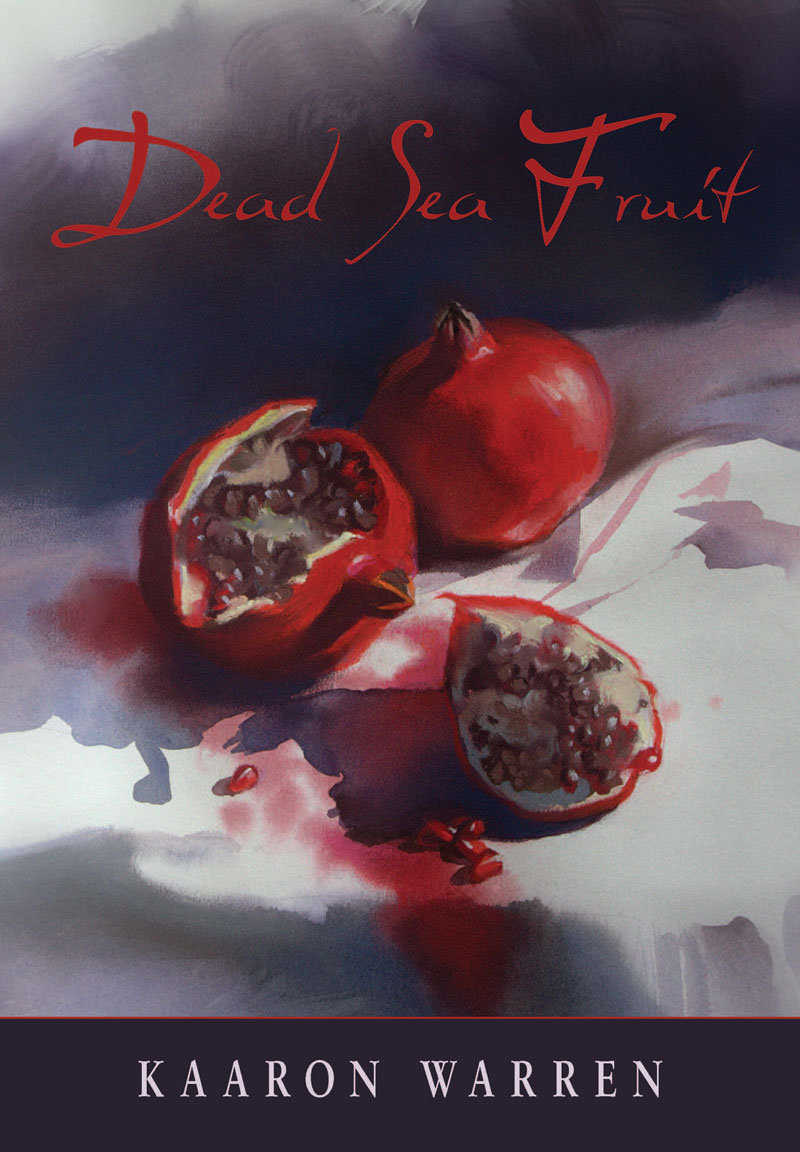
Kaaron Warren is an Australian writer living in Fiji. Her latest book is Dead Sea Fruit, a collection of short stories published by Ticonderoga Publications.

 More from Swancon 36/Natcon 50 >


Posted in Blogwax, Swancon36/Natcon50, The Buzz | Tagged , , , , , , , , , , , , , | 3 Comments

Winner, ‘Woman’ Challenge, and more..

Congratulations to Adina Pelle, winner of the 500-word ‘woman’ challenge with her modern take on a classic tale, Romeo No Longer Loves Juliet.

Adina wins a copy of Write Great Fiction – Dialogue by Gloria Kempton.

Thank you to all who entered this round. The entries ranged from warm to laugh-out-loud funny, heart-rending to downright creepy. Each was a thoroughly enjoyable read.

Warm thanks also to our guest judge this month, Danielle Benda. Danielle is a veteran journalist, radio producer/broadcaster and, most recently, program manager for the Perth Writers Festival.

Danielle was given only the titles and text of each entry, without author names, and agreed not to read the posted versions so was not aware of ‘likes’ or comments. See below for her thoughts on this round.

A reminder that the April 500-word challenge is currently open. Write up to 500 words around the theme ‘hero’ and send them to waxings.blog@gmail.com by midnight, 4 May 2011 (AWST, GMT+8). The winner will receive a copy of Stephen King’s On Writing: A Memoir of the Craft.

Judge’s comments:

The nine stories that were presented this month offered such a variety of styles and approaches to the topic ‘woman’, it was quite hard to compare one with the other. There were a couple that attracted my attention, and I found the final choice a bit tricky.

Romeo No Longer Loves Juliet won because I liked its original voice.

It subverted a traditional story, central to our culture and then gave us layer upon layer of cataclysmic disaster to question why such story – or type of story – has this central place in our culture anyway. It has a nice dry, ironic tone and cliches are used with good effect.  A couple of spelling and grammar errors marred it.

***

Win A Publishing Contract

Text Publishing is offering a publishing contract plus a $10,000 advance on royalties to the winner of this year’s Text Prize for Young Adult and Children’s Writing.

Submissions of unpublished manuscripts will be accepted from 2 May to 3 June, with the winner announced at the Australian Booksellers Association Conference in Melbourne on 24/25 July.

More details and the entry form are available here.

***

Latest Posts

I know I keep harping on about it but it’s important – Waxings is intended to be a forum for airing and sharing. Please share your work with us, take the time to read work posted by other contributing writers and provide constructive feedback.

Our most recent posts are short stories, The Blue Dress and The Cherry Tree by Adina Pelle and Married To A Laugh by Neil Lade. I’d love to read and post your latest words.

Posted in 500-word challenge, Blogwax | Tagged , , , , , , , , , , , , | 1 Comment

Fantastic Australian Voices – Part 2

Hello? Is that the Australian fantasy voice? What’s that? You’re an Australian writing fantasy? No, that’s not what I’m looking for. Not at all.

Oh yes, there’s most definitely a difference. Some argue it doesn’t mean very much. But today it’s very important indeed. You see, I’m writing about the Australian fantasy voice – more specifically, whether there is one. So I’m looking.

You’ll let me know if you come across it? Great, thanks so much. That’s very helpful. Okay then, bye. Yes, bye.

***

Well, here we are then. No evidence of a uniquely Australian fantasy voice to speak of and acres of blank screen before me. Let’s start with some Australian fantasy writers and see where that leads us.

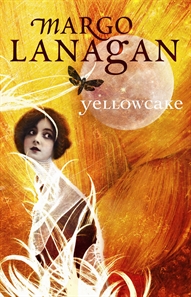
At this year’s Perth Writers Festival, Margo Lanagan (latest publications: Yellowcake, Zombies vs Unicorns) said she had initially thought her work wasn’t particularly Australian but, on checking for the purposes of a panel discussion on the topic, found about a third of it was set in Australia or featured Australian characters.

What’s more, whether or not she intended to incorporate Australian characteristics, Lanagan’s  readers, particularly those in America, seemed to think there was something identifiably Australian in every book she wrote. “They will read Australian into everything and anything odd they find they seem to think is an Australian-ism,” she said.

Lanagan didn’t think it was particularly relevant or important whether there was a unique Australian voice in fantasy.

“I don’t think it’s necessarily something that authors are individually terribly concerned with,” she said. “It doesn’t come into your work as a whole whether you are being an effective representative of your country. You are just trying to write the story that seems to need to be written and if they suggest themselves as a particularly Australian story then they come out that way.

“It just makes us look so insecure to be continually raking over this ground, to be talking about whether we are distinguishable on the world stage. It’s not really an issue.”

But she did accept that the Australian-ness of a novel could have an impact on its marketing and readership.

“My next novel that I’m working on is going to be set in New South Wales, in colonial times, and my agent tells me things like ‘I’m sure it will be wonderful because you’re writing it but I think it’s going to be a bit hard to sell’. There’s a line that quite a lot of (American) readers seem to draw. And in the UK as well, but it’s a different kind of line there. It’s not the exoticism, it’s a kind of snobbery.”

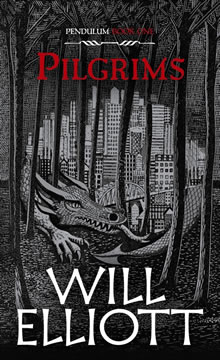
Will Elliott (Pilgrims) enjoyed tremendous international success with his novels and deliberately steered away from anything distinctively Australian in his writing.

“I’m trying to get as far away from this place as I can when I write so I really don’t include too much Australiana,” he said in the PWF panel discussion. “I try to make it fairly universal I guess. When I read good British or American fantasy, it doesn’t seem particularly British or American to me, it just seems like good fantasy.

“I’m basically trying to get away from reality as we know it so I don’t try and incorporate things, familiar landmarks or familiar themes into the work because, to me, that’s the point of fantasy. One of the points of fantasy is to get away and imagine something else.”

Elliott agreed with Lanagan about international marketing, saying he had been asked to change some terms for American audiences, such as the word “ute”. But he rejected a suggestion from the audience that he was selling out.

“I haven’t been asked personally to change a whole lot,” he said. “Selling out, to me, would be removing something because it offends a political agenda or something like that. A few stylistic changes or changes in terms doesn’t offend me particularly.”

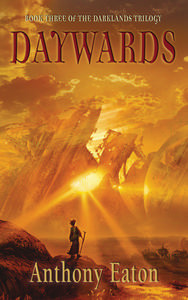
The only panellist who deliberately set out to write Australian fantasy/science fiction was Anthony Eaton (Daywards), who described his writing as “militantly Australian”. While he had a lot of positive feedback about the Aussie nature of his books at home, it had limited his international prospects.

“I have been told my publishers have been trying to sell my books overseas but particularly some of the American publishers are just not interested because they are too Australian. They are not easily convertible if you like,” Eaton said. “I’ve been told all sorts of things – focus, subject, character, the landscape is too alien.”

That last bit is a little odd when you consider we’re talking about fantasy novels. But Eaton, who set out to write identifiably Australian fantasy for his PhD, seems comfortable with his choice.

“I think everyone likes seeing their own landscape, their own world,” he said. “For me at least, the art of writing a successful fantasy is not about imagination and world-building. It’s actually about finding the little touchstones of humanity and reality and then inserting them in so that the reader has got those things to grab on to and that then extends their understanding of the whole book.

“And I think when you read a whole book that is identifiably in your country, in your land, the place you know so well, albeit 10,000 years in the future after an apocalypse, you’ve still got those little touchstones.”

So, not so much in terms of a unique Australian voice in fantasy. But we do have an awful lot of fine Australian voices in the genre, employing landscapes and characters that are and are not identifiably Australian. And there’s nothing wrong with that. Surely the aim, ultimately, is simply good fantasy?

-More from the 2011 Perth Writers Festival. 


Posted in 2011 Perth Writers Festival, Blogwax, The Buzz | Tagged , , , , , , , , , , , | Leave a comment