Fantastic Australian Voices – Part 1

In my mind, the combination of ‘Australian’ and ‘fantasy’ equals Mad Max. At least, it used to.

Please don’t write in, I know Mad Max doesn’t technically fit within the fantasy genre. But it’s in the ball park. And recently, when I had cause to ponder whether there was a uniquely Australian voice in fantasy – as distinct from the plethora of fine Australian writers of fantasy in general – there he was, ‘our Mel’, a young and soulful vision, as he was long before the unpleasantness.

Despite Mel’s dusty deliciousness at the time, I wasn’t a huge fan of Mad Max. The story was too grim, the characters too uncompromising for my then-tender years. But I recognised, even then, that the use of Australian landscape, characters and accents was unusual.

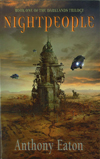
As a fantasy buff, and a traditionalist at that, when I picked up the first book of Anthony Eaton’s Darklands trilogy, I was nervous. I had recently interviewed Eaton and heard his panel discussion, along with fellow Australian authors Margo Lanagan and Will Elliott, on the subject of an Australian fantasy voice at the Perth Writers Festival.

Eaton was the only one of the three to have deliberately included Australian landscapes in his work. Nightpeople was his PhD thesis, in which he set out to write a distinctively Australian fantasy. The book was set in a post-apocalyptic landscape. Australia plus apocalypse equals a literary Mad Max, right? Wrong. So wrong.  Like saying cabernet equals grape juice. 

Here I ditch the Mad Max comparisons because, well, that was a movie and this is a book. I just wanted you to understand where my head was when I sat down with Nightpeople. I was sufficiently intrigued by Eaton’s approach to want to read it but thought there was a risk of the narrative being swamped by the Australian ‘theme’. I needn’t have worried.

Eaton has done a masterful job of setting his novel in an Australian landscape, weaving in Australian culture and perspective and addressing issues that resonate strongly with Australians – without producing a book of clichéd Australiana.

There’s no sense of ticking boxes – yes, that’s Aussie, yes, that too. If you sat down and analysed each sentence, each word, you could argue that the landscape isn’t necessarily Australian, the characters are not necessarily Australian. Yet, as an Australian reader, you know exactly where you are, who you are spending time with. It is a powerful extra element of familiarity.

It would be fascinating to read these words with foreign eyes, experience the landscape as alien, struggle to hear the characters’ accents. I suspect the impact of the story would be vastly different, although still significant.

Eaton has tackled important and controversial issues, taking us past the endgame to confront what comes next. The themes are big – we are, after all, talking a post-apocalyptic setting – and the political message is clear. Yet the delivery is carefully calibrated. There is no hysterical ringing of alarm bells at the expense of the narrative, which is suspenseful and human and absorbing from start to finish.

Skyfall and Daywards, the second and third novels in this trilogy, have already been published, the latter in April last year. So why review Nightpeople? Well, it’s the only one of the three I’ve read so far (still waiting, rather impatiently, for the other two to arrive) and I liked it enough to want to write about it. And if you haven’t read any of the three, it makes sense to tell you about the first.

Also, to be honest, I set out to write about the Australian fantasy voice session at the PWF and it morphed into a review, so I went with it. The next post will be about the PWF session.

Posted in Blogwax | Tagged , , , , , , , , , , , , , , , , , | Leave a comment

Ending the Suspense

Sometimes, the words simply refuse to come. Or they spit out reluctantly, occasionally spraying the screen in explosive gouts of rusty prose in protest at their forced exposure.

At these miserable times, I look around at the rows of books on my shelves, the stacks on my desk, on the floor beside and behind me; I think of the teetering pile beside my bed and I wail “HOW DID THEY DO IT?” (in my head, of course, as it’s usually late at this point and all the sensible people are asleep).

‘They’ are those exotic creatures otherwise known as published authors and ‘it’ is finish a novel. The getting published bit is also of interest but, at this stage, just finishing the damn story is enough to win my deep admiration.

“Ah,” some might say, “You’ve already told us you don’t plan. That’s clearly the problem.”

Maybe so, dear readers. Then again, maybe not.

At this year’s Perth Writers Festival, there was a lot of discussion about process, planning and problems along the way to publication. Some authors did plan and knew the ends of their stories before they began. Others – hallelujah! – did not.

So, in the interests of hope and validation for non-planners like me, as well as an insight into the agonies involved in birthing three very different books, here’s how successful authors Miguel Syjuco, Rodney Hall and Adam Ross did ‘it’.
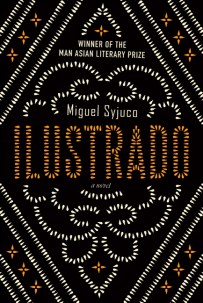
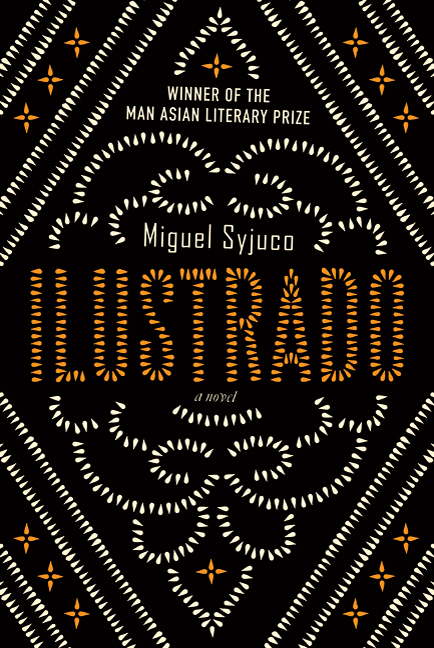
Miguel Syjuco (Ilustrado) – Knows ending

Syjuco won the Man Asian Literary Prize in 2008 for his first novel, Ilustrado, before it was even published and has been described in The Guardian as “already touched by greatness”.

Ilustrado explores 150 years of Filipino history through a young student’s investigation of a famous Filipino writer whose body is found floating in the Hudson River in the United States. The writer’s life, his investigation into corruption and the life of the Philippines itself, is recreated through extracts from his short stories, novels, newspaper articles, letters and text messages.

Syjuco, who wrote Ilustrado as his PhD project, spoke eloquently at the PWF of his desire for the novel to reflect the cultural melting pot that is the Philippines and its rich history. In a session titled ‘Breaking the Mould’, he admitted the novel was challenging for readers and said he “tried to create a book that wasn’t out to just break the mould but had some very distinct aesthetic and philosophical goals that it had to achieve through its form.”

In this context, it would be remarkable if Syjuco hadn’t planned the complex and ambitious narrative. However, as it turns out, it wasn’t careful planning but inspiration born of despair which saved Ilustrado.

“It took me four years and within that period of time you change your mind an awful lot,” he said. “I had an idea of how I wanted to end the book and that sort of kept me sane because, everywhere else, I was lost. So having an ending helps.”

Even so, Syjuco was unhappy with the original manuscript, a straight narrative of 200,000 words. “It excerpted from Crispin (the writer) randomly almost and it was really unreadable,” he said. “I didn’t even want to read it.”

In despair, Syjuco got stoned, threw himself on a couch and watched a documentary about textile manufacturing in the southern Philippines.

“I know it sounds very obvious but, at the time, it was a real eureka moment,” he said. “They take the different threads, dyed them individually, arranged them in a certain way on the loom and then weaved them together to make patterns and ‘Boom! That’s it, that’s how I’ve got to write my book.’

“So I rushed to the computer, I took apart my manuscript and I spun those individual narrative threads on their own and then arranged them to try to create patterns.

“So that’s the way the book works. There’s no straight Aristotelian rising action-denouement sort of structure. It’s sort of different fragments bumping up against each other creating tension, much in the same way that in jazz music or classical music recurring motifs give the piece shape and formative action, and that’s basically what I tried to do with the book.”

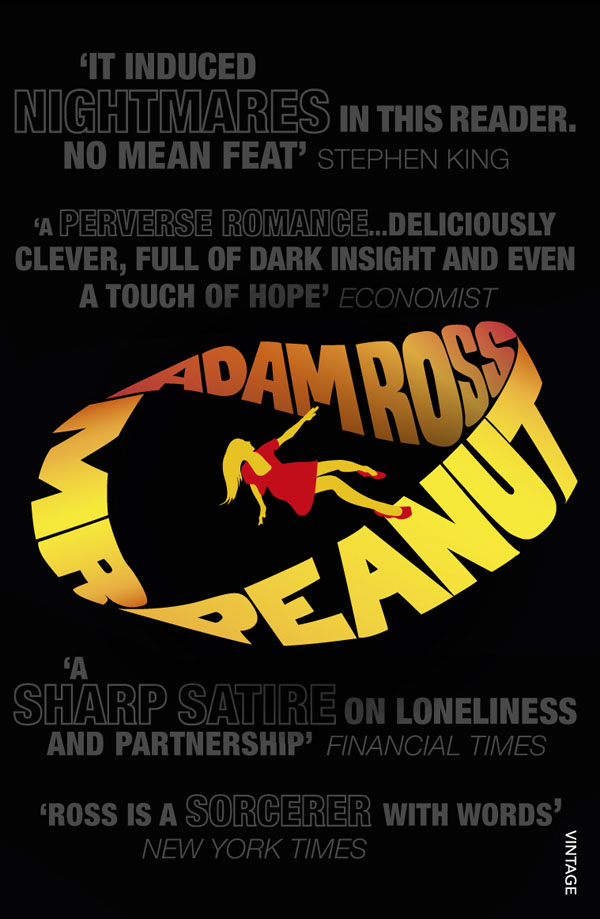
Adam Ross (Mr Peanut) – Knows last line

Ross went one step further than planning the end of his novel. From the start, he knew the very last line: “All the way to her heart”.

“That was my lodestar,” Ross said. “But the middle was long and hard. I always work that way. I have a very clear idea of where I’m going but the connective tissue from the beginning to the end is the toughest part of the process and it requires a great deal of faith. So I sometimes put things down for a long time.”

Inspired by a conversation with his father about a suspicious death in the family, as well as a large and recent dose of Alfred Hitchcock, Ross sat down and wrote the first three chapters of Mr Peanut “pretty much verbatim”. Then he got stuck.

Mr Peanut is the story of a computer game designer who fantasises about his wife dying. When she ends up dead, he is the prime suspect. Ross created two detectives to investigate the murder – one who believed everyone he interrogated was innocent, the other that everyone was guilty. It didn’t work and the novel languished.

“I had written myself into something that I didn’t fully understand at the time and then what subsequently occurred was essentially a 12-year process of figuring out what I had started,” he said.

Over the next several years, Ross learned the true story of Sam Sheppard, a doctor convicted of killing his wife in 1954 and who inspired the television series The Fugitive, which got him thinking about perceived roles in marriage and eventually led to the creation of a new detective character.

Ross also came across the work of MC Escher – famous for ‘impossible’ artworks and those where one image can be seen to morph into another – as well as the two-sided concept of the mobius strip, which put him in mind of a person walking on the floor, which to another person was the ceiling.

“What I was trying to figure out was a way to bend the expectation or change the reader’s posture to the narrative,” he said. “What I needed was that big picture and what happened was, it was the character of Mobius, who is either a private investigator or hit man a la Hitchcock’s Stranger On The Train. He is the character that binds every narrative and has different meanings for each individual.

“So that was the eureka moment and then I had these massive white boards in my office. I had these massive diagrams of how to string Mobius as inter-connective tissue. This was the form I arrived at. The book is a giant mobius strip.”

The long road to Mr Peanut has since been vindicated by a glut of positive reviews and all important buzz. The Guardian’s Christopher Tayler said the book was stuffed with wit and stylistic tricks and Stephen King said it gave him nightmares.
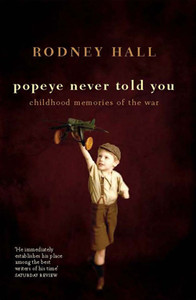
Rodney Hall (Popeye Never Told You) – Does not plan!

Hall has had more than 30 books published and has won the Miles Franklin Award twice. He writes by hand. And he does not plan.

“I never know where to go,” he told the PWF session. “I start from the germ of an idea in conversation or something but I allow them to guide me where they are going. They all behave totally differently.

“I have maybe 14 or 15 begun books, some of which got to almost completion, like maybe 150 pages, before they told me they were going nowhere. Sometimes just one chapter or even one page.”

Not only does Hall not plan, he also doesn’t change his words around once they’re written.

“I never change the order,” he said. “The only way I can be secure about how the reader’s feeling is in that moment when the writer is closest to being his or her own reader and that’s the moment you get the words, each sentence, on the page.

“For that reason, I never ever change the order of anything because if I tamper with that, I’ve tampered with whether I can feel where the audience is. So I always take things as they evolve and so my books tend to be, some of them are very long. And I love that in other people’s books.”

Hall’s latest book, Popeye Never Told You, is a memoir of his time living in a small town in the west of England, aged 5 to 9, during the World War II.

He wanted to capture those very clear childhood memories before they faded. So, about five years ago, Hall sat down and wrote a standard autobiography which explained what happened to him, how it affected him and put it all into historical context.

“That was about a 200-page book and I sat with this really uncomfortable thing, like a homunculus on my back, because I fundamentally hated it,” he said.

“It’s terribly difficult to write about yourself, especially if you have a lifelong discomfort with yourself. I mean I, for example, hated my name, the name I was given. I hated it so much that i was about 40 before I could happily answer the phone using it. I don’t know why I hung on to it and didn’t change it. I’ve never been very comfortable with it and so I was very uncomfortable with the idea of an autobiography.”

Unsure what to do, Hall asked “a brilliant young Melbourne writer” to read the manuscript and his verdict was a blunt “Look, I’m not interested in this at all.” According to Hall, his friend went on to say: “Every time the little boy is there it suddenly comes to life. But when you tell us what it all means, who cares? Second World War, who cares what the German bombers were doing? Why they were dropping bombs, I don’t want to know.”

That was the turning point. Hall decided to include only the child’s experience in the book. No history, no context, no story.

“My project in the breaking of the mould was to avoid at all costs any kind of narrative at all,” he said. Hall assembled his memories so they interacted but they were still a collection of tiny parts.

“You don’t just read through because you’re not going to get a story, you’ll get a sequence of events,” he said. “But read the gaps because you’ll see that you see, hopefully, a lot more than the little boy is showing you, tells you.”

Hall was not the only author at the PWF to endorse the ‘let the story go where it will’ approach, but the planners out-numbered them by a long way.

I don’t care. It works for him so it can work for me. Now, if only the words will come.

Posted in Blogwax | Tagged , , , , , , , , , , , , , , | 2 Comments

The Death of Print? Maybe Not

As most book-lovers know, it’s never been easier to buy and read a book.

E-readers are now being sold with free beginner libraries of 500 or more classic novels. Additional titles, both classic and contemporary, can be purchased at far below hard-copy prices and down-loaded near-instantaneously to dedicated readers, computers, tablets and mobile phones. Whatever your literary fancy can be at your fingertips within seconds.

Great news for those of us who despair when faced with an unexpected chunk of free time and no decent reading material. But what does all this digital accessibility and flexibility mean for the hard-copy books we know and love? Is this the end for our three-dimensional, dog-eared, dust-gathering friends?

Well, it appears that reports of print’s demise have been, with apologies to Mark Twain, greatly exaggerated.

A panel of four insiders at the recent Perth Writers Festival – author/editor James Bradley, The Australian’s chief literary critic, Geordie Williamson, author and Time magazine book critic/lead technology writer, Lev Grossman, and writer/reviewer/blogger, Angela Meyer – has concluded that the advent of the digital age in publishing is cause more for excitement than mourning. And I choose to rely on its collective wisdom.

Addressing the topic ‘The Death of Print’, the panel ranged from the nature of a ‘book’ to changes in reading habits, education and critical thought, from what history teaches us to new marketing methods, from the influence of form over content to the economics of publishing. It was an absorbing and enlightening discussion. So, a quick taste here with a strong recommendation that you read the transcript of the whole session via the link below.

Bradley said the publishing industry was entering a period of massive change similar to the seismic shift from which the music industry had just emerged, stronger, fresher and re-energised.

“It’s fascinating, it’s terrifying, but it’s also really liberating,” he said.

“What happened in the music industry, about 10, 15 years ago, is that two things happened. First of all, the means of production got democratised, people started being able to make their own music, distribute their own music, and the old business models got broken by piracy and digital distribution.

“Now, those two things did dreadful damage to the industry, to the institutions that supported it. But what they actually engendered was a kind of wave of creativity that went through music and it’s incredibly exciting.

“People started making music, sending their own music around, and what’s come out the other end is a really vibrant industry that doesn’t look anything like the old industry. It’s a really vibrant culture that doesn’t look anything like the old culture. And that’s actually beginning to happen right now (in publishing).”

Which is good news, or bad, depending on how reliant you are upon the traditional infrastructure. 

“There’s all kinds of new things being written and there’s all kinds of mutations of form and there’s all kinds of experimentation in terms of distribution, in terms of what’s being written, and it’s actually incredibly exciting,” Bradley said.

“I feel like there is a kind of energy underlying the scene at the moment which is actually very interesting and I think it compares interestingly to the absolute exhaustion of literary publishing.”

Williamson agreed, saying global publishing houses had brought about their own demise by relying too heavily on convention and not responding to changing market conditions as nimbly as smaller, independent publishers.

“I think it’s fair to say that there have been some very good results from this shake-up,” he said. “The corporate consolidation of global publishing, which was a feature of the landscape in the ‘80s and ‘90s, kind of reached its total. It was just one monolithic organisation.

“It, I think, inculcated in its staff a kind of a tendency towards publishing more, getting it out more quickly, taking it back off the shelves if it didn’t sell, of elevating authors’ first books to kind of stellar positions on the back of the strength of the amount of money they were given, which was unfair to those authors when, say someone like Graham Greene, where the water didn’t start running clear until his fifth book.

“Global publishing has often been conventional and this shake-up allows us to return to books that are odd, that are different, that are wrong-box. So, as the barriers break down, I think we actually will see good books and there will be a return to coterie publishing, the kind of publishing we had before corporate consolidation.”

Williamson had some concerns about a headlong rush into digital publishing, the most worrying being the possible loss of the editorial oversight provided in the analogue process. But he believed we were experiencing “a brief period of historical co-existence which is ending almost as we speak”.

Grossman challenged the predicted brevity of this co-existence. For perspective, he pointed to the last time a new book technology arose, the transition from scrolls to the codex book form we now use in the first century AD.

“What I want to stress is that the scroll didn’t go away,” he said. “Scrolls, very little in use now, but it stuck around as a major form of the book for at least a millennium and a half and probably a bit longer, which is a way of saying that I don’t actually think a revolution is going on here.

“The rise of a new book technology does not mean the death of the old one. In fact what will happen is the whole book ecosystem becomes more complex, becomes more bio-diverse.

“These two forms – the codex book and the e-book – will co-exist in a more complex ecology but they will co-exist, I think, in a positive way. There will actually be some synergy. The strengths of both will come to the fore. But I don’t see this as a revolution at all. I see it as something more positive and, I think, more interesting.”

That said, he did not agree with using technology for its own sake.

“Just because you can embed video in a book doesn’t necessarily mean it’s a good idea,” he said. “I do not believe that such a thing as a good enhanced e-book has ever been produced. That animal does not exist. I suspect that it never will.”

Meyer also anticipated the peaceful co-existence of digital and print books and rejected any suggestion that younger generations would forsake print for new technology options. She cited recent statistics from the UK book trade magazine, Bookseller, showing strong support for print books among teenagers.

Of those surveyed, according to Meyer, 41 per cent had read a book on a computer, 17 per cent on a mobile phone, 13 per cent on an iPad, and 9 per cent had read on a dedicated e-reader. When asked, all adults and children surveyed said they preferred print books ahead of any other form, including e-books and magazines.

 “I think people get really worried that (young people) are just going to forget about books,” she said. “I don’t think it as dire as that.

“People want to use their imagination. That’s why they read. They don’t want to click a thing and find out exactly what the character looks like.

 “And you look at what teenagers are reading and they are reading massive fantasy novels and things like that. Their attention spans, it might be changing, they might be taking breaks and tweeting about the book as they are reading it but they are still reading the book. They are getting through it.

“I do feel, maybe I’m an optimist, but I feel there will still be this hunger for lengthy narratives with no interaction and pictures.”

On that, all four panellists seemed to agree. But will that narrative still be in a ‘book’?

Posted in 2011 Perth Writers Festival, Blogwax, The Buzz | Tagged , , , , , , , , , , , , , , , , | 1 Comment

Memoirs Not Mere Memories

Guest post by Tamara Hunter

A New York Times writer recently suggested, rather bluntly, that about three quarters of the memoirs on the market should never have seen the light of day.  

There was a time, Neil Genzlinger wrote, when “unremarkable lives went unremarked upon, the way God intended”. Genzlinger knew he sounded harsh, but stuck to his conviction that the memoirs market is an absurdly bloated genre in dire need of culling.

I half expect award-winning Australian writer Carmel Bird to disagree – especially since she’s written an engaging guide for aspiring memoirists and when we spoke was preparing to give a workshop on the subject at the recent Perth Writers Festival.

However Bird, whose catalogue includes a collection of startlingly original short and long fiction and several writing guides, says Genzlinger has a point.

“The best thing he said – and I think this applies to all writing – is if you didn’t feel you were discovering something (as you wrote it) don’t publish it,” she says.

“Another great thing he said is ordeal without perspective is merely an ordeal. I couldn’t agree more. You’ve got to have perspective and perceptiveness and a lot other things – control of language and the like. And then he talked about immature writers writing memoirs and I agree with that as well.”

Clearly it’s one thing to have a fascinating life or experience – another entirely to write about it compellingly. While many memoirs may walk off the shelf due to the name on the jacket, that doesn’t necessarily make them good memoirs.

“Celebrity memoirs, for instance, are just full of trashy writing and sentimental cliché,” Bird says. “I think the celebs could write – but of course they don’t have to bother because the marketing decision is guided not by the quality of the memoir, but by the value of the celebrity.”

Bird doesn’t want to bag anyone in particular but cites a public figure who achieved remarkable things at a young age, only to turn out a memoir which proved to be the least interesting part of the whole story – a book which demonstrated that no matter what that person’s other qualities, they lacked any kind of passion for writing. Passion, says Bird, is key.

“There has to be a dedication and passion for the literary process at some level in order for the experience to be properly communicated, decently communicated, helpfully communicated to other people,” she says.

She refers to one of the books reviewed by Genzlinger – the only one of the four he cites to be reviewed positively – and highlights his description of it as a spare, beautiful exploration.

“That’s what we want, beautiful exploration; a beautiful exploration where the writer takes the reader’s hand and says ‘Well, let’s explore this together’ and the reader feels safe. And the reader feels they are having moments of revelation and illumination. That sounds a bit grand, but that’s what literature does – it illuminates you.”

Bird talks beautifully of the writer’s impulse to explain themselves to the world and the world to themselves.

“Sometimes in the process of doing that, the writer discovers that they have some insights about the world to offer to other people,” she says. “That is a gift that they can offer to the world, and when you offer someone a gift – say it’s cookies – you make the best cookies you can. You wrap them up in nice paper and you tie them up with a bow and you write a nice card and you give them as a gift. Writing is the same – you do the best you can.”

So how do you find the writing equivalent of the pretty paper and bow?

“Experience, practice and reading,” Bird responds at once. “Life experience, practising writing, and reading good writing. If you want to write fiction, you read fiction. If you want to write memoirs, you read memoirs.”

After years spent teaching others in workshops and classes, Bird is of the considered opinion that anybody who puts their mind to it can write simply, cleanly, and in a way that engages readers – especially once encouraged to throw away cliché and elaborate, empty phrases and vocabulary.

“But in there there’s a writer, isn’t there? They put their mind to it. They don’t only put their mind to it – they put their heart, their mind, their time, their life, everything to it. And if they do that, they can do it.”

Bird, who also wrote the disarming Dear Writer, a series of warm, humorously instructive letters from a fictional manuscript assessor to an aspiring writer of fiction, says memoir writing can be even more emotionally draining than fiction.

“Not always. I mean fiction writing can be very demanding on the writer, depending on what they’re writing about. But memoir writing can really touch the heart of the writer very, very deeply, and be very troubling as they’re writing.”

Painful as it can be though, Bird says that ultimately writing should be a pleasurable process.

“I mean, if you can’t derive pleasure from it, don’t do it. I’m writing a novel at the moment and I have to dedicate a lot of time every day to that, which means there are other things that I can’t do. Now I would prefer to do the novel than to do the other things, to tell you the truth, but there are choices I have to make.

“On the other hand, as I sit at the computer writing that novel, I’m having the greatest fun. It’s not a funny novel, but I’m having the best time, and I’m getting a lot of pleasure. I’m sitting there discovering something. That’s what I’m doing – I’m discovering. And I can’t do it in my head. I can think up something or other about the novel that’s something I might write tomorrow but until I write it, I don’t discover it, and it’s a marvellous, marvellous feeling to discover the thing as you go along. And when the writer is making those discoveries, the ultimate reader will go along and discover too.”

She comes back to the idea of writing as a gift, saying that once you write something down – even in a diary that isn’t discovered for 100 years – you’re transferring your thoughts, your life, your heart and your feelings to at least one other person.

“We read Samuel Pepys’ diary, from I don’t know how many hundred years ago, but the life that brings to that era is extraordinary. Of course he was probably a genius, but anybody can do it to a degree. It doesn’t mean that every memoir is going to be a best seller. Not every child who learns the violin ends up at Carnegie Hall, but they can give pleasure by playing their little concert to their friends, to their family. So I think there is a place for remembering that writing fiction, but in particular writing memoirs, is a gift that the writer is offering other people.

“Anybody can write. They can all write. But it’s about passion and love for it, and dedication and discipline and giving it the time and space. And dignity – giving writing its dignity.

“I know it sounds kind of airy fairy and impossible, but I do think that if people write with the truth of their own hearts, then they will write well.”


Carmel Bird is a leading Australian novelist and short story writer who has been repeatedly short-listed for the Miles Franklin Award. Her novels include Cape Grimm, Red Shoes, The White Garden and The Bluebird Cafe. She is the author of several short story collections and has edited several anthologies including The Stolen Children – Their Stories, and most recently, Home Truth. She has taught writing extensively and has written three books of writing advice including Writing the Story of Your Life: The Ultimate Guide. Her most recent novel is Child of the Twilight. She grew up in Tasmania and now lives in Victoria. Some of Bird’s writing can be found here: www.carmelbird.com

More from the 2011 Perth Writers Festival >

Posted in 2011 Perth Writers Festival, Blogwax, The Buzz | Tagged , , , , , , , , , | 2 Comments

Getting Out Of Your Own Way

Guest post by Tamara Hunter

Writing – you love it. You either call yourself a writer or you want to be one.

But how often do you actually sit down and write? What are the reasons you invent not to write? Do you even know – or do you just file it under P? P for Procrastination, that is. P for putting it off for a better time – a time when there’s no housework, no kids interrupting, nothing on TV; a time when you feel more inspired, more energetic, have a fully formed idea to work with; a time when there’s more time available.

Now, take your reasons, turn them over and around and inside out – and ask yourself why you’re really not writing. Look more deeply, says author Jon Bauer, and chances are you’ll find something more confronting behind all the faffing.

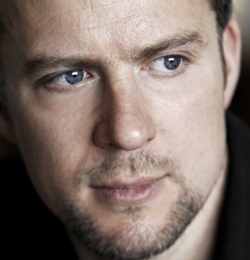
Bauer, whose debut novel is Rocks in the Belly, calls it getting out of your own way. He held a workshop on the subject at the Perth Writers Festival and spoke to Waxings beforehand.

Bauer says everything we do represents a confrontation with ourselves, one way or the other. Bringing up a child, doing the washing, having a relationship – all pit us, to some degree, against ourselves.

“But nothing that I’ve found, apart from relating to others, has confronted me with myself as much as writing has,” he says. “You face the obstacles you put in your own way, you face the voices, the insecurities, the doubts – all the reasons there are to give up in the search of what it is you’re trying to achieve.”

Bauer says anyone can be shown the stylistic and skill-based elements of writing, like characterisation, plot or structure. But they’ll struggle to get to the end of that novel, short story, or wherever it is they’re headed in life if they can’t be honest with themselves about the biggest obstacles to their own success – why they’re doing it, what happens to them when they are doing it, and all the ways there are to stop doing it.

“There are lots of things which deter you and push you away and there are lots of ways in which we think our reasons are genuine and well founded, and absolutely time is an issue, and absolutely all these things…and they just aren’t,” says Bauer. “You’ve got to consciously face why it would be that you don’t want the time.”

Maybe it’s fear that you won’t be good enough, or maybe it’s fear of success. Maybe you think you need to be perfect, or you’re worried about what others will think, or you think you don’t have anything wonderful to say – the reasons are different for everyone.

Whatever the reason, Bauer believes awareness is key to eliminating obstacles.

“I seem to be full of twee sayings but that which you hear you don’t listen to,” he says. “It is revolutionary to come face to face, in awareness and kindness, with what it is that you put in your own way, and as soon as you have that in awareness it just loses all power. And so people will be able to sail through obstacles that they were once butting into – they just will.”

He says ultimately the best way to judge whether people really do want to write is to see what they produce. While there are plenty of people who profess to want to write, only a small percentage of them ever jump all the hurdles and achieve their goals.

“I would make the maybe slightly harsh suggestion that those that don’t, don’t really want to,” he says. “Not enough. Not enough to face the pain of it. Not enough to actually face themselves and go really close to their idea of whether they’re actually good enough anyway.”

He’s worried about sounding hard, but Bauer seems anything but. He comes across as funny, self-effacing and compassionate, his answers thoughtful and steeped in his personal experience of self-confrontation. When his own book was finally published, he was surprised to find himself feeling the opposite of great.

“When my book came out I found out that a lot more of me than I realised was interested in validation,” he says. “I thought that having a book come out was going to solve a lot more of my problems than it did. And I wasn’t even aware of those needs that I had for that book until I felt the grief after it had come out and those things hadn’t happened.

“I wanted it to fix all my financial problems and I wanted it to plug that hole that we all feel in our middles. I guess I just thought it was going to make me feel finished, or satisfied.”

He’s not ungrateful – he’s proud and sees there are some wonderful things about being published. Even so: “It’s just not that great. Actually, I’m having to systematically untangle myself from that process. I’m having to systematically work at stepping away from it again and stepping back to where I was.

“Many writers talk about this, and I can see why – not that I’m Mr Big – but those days when I was just doing it for its own sake, and never really thinking – people were pushing me to get published and I just didn’t think I was really ready: glorious days, glorious days. My message to (people in that position) would be you’re really lucky. And if you’re enjoying it you’re a success, that’s it. The rest will follow.”

He echoes Ray Bradbury in lamenting how so much of life now is about things not done for their own sake.

“Writing is one of those rare places where even though it might not necessarily be paying the bills, it’s one of those beautiful things in life we can do for its own sake – one of those unproductive, wonderful things like dancing, or whatever it is where you do it for its own sake,” Bauer says.

“There’s a strong rip in writing that’s pulling you out to this need to be published, this need to be perfect, this need to be validated, this need to be all those things. And you have to swim against that rip all the time because, back on the shore, you’re validated already. The writing validates you naturally, because you’re finding yourself and you’re enjoying it. You’re already validated.

“The block is in your own shame and your own observation of yourself and that can be ignored. Any victory you make over that in your writing will spill over into your life.”

Bauer says the key is simply to write – good writing, bad writing, any writing. Anyone with talent – and that’s most of us, he ventures to say – will find at least the nub of something good in what they put down, even if the rest is dross. There’ll be a sentence, a phrase, an idea or a theme which is worth exploring. Rather than thinking it’s awful and using it as a reason to stop, someone who’s serious about writing will do the work needed to bring it up to scratch.

“You don’t go to the shower and expect to turn the tap on and hot water to come immediately. It’s almost as if some people keep going to the taps and turning it on but it’s not hot so they turn it off again, and they go to it and turn it on and it’s still not hot and they expect it to be hot without them running it and working at it and getting through that bad work and that bad writing and those mistakes.

“One teacher I had kept drumming it into us that people expect to write a novel in one or two or three drafts, and actually it’s a huge amount of redrafting. One of the reasons people stop is they go – this is awful!

“Now, I’m 75,000 words into my next book and a lot of it is awful, but some of it is great and some of it will be great and I can see themes and scenes that are already going to be in the final novel – but they will need an awful lot of work.

“As you go along you know that some of those things that are erupting out of you are sticking, and a lot of it will fall away. I mean, of those 80,000 words I would imagine 20 per cent will be in the final draft and that 20 per cent will have been worked on 100 times. But imagine if you did write it and came back to it and realised that it had gone off when you’d turned your back, and so you gave up.”

He believes there’s no such thing as a bad novel – only those which should have had more work or more maturation on the part of the writer.

“A lot of books come out too soon. A lot of people sign a two-book deal and they have to rush their second book. And I know this is again a twee saying, but there’s no such thing as a bad book – it’s just unfinished.”


Jon Bauer is a novelist and writer of short stories and plays for radio and stage. He came to writing at the relatively late age of 30 and achieved prominence after having two short stories placed in the top 50 of the Bridport Prize – a feat which has never been repeated. He was born in England but has permanent residency in Australia under a Distinguished Talent Visa. His first novel is Rocks in the Belly. Bauer lives in Victoria and is working on two more novels.

More from the 2011 Perth Writers Festival >

Posted in 2011 Perth Writers Festival, Blogwax, The Buzz | Tagged , , , , , , , , , , , | 4 Comments

Lashings and Lashings of Childhood Faves

Guest post by Tamara Hunter

The enthusiasm bubbling out of the authors up front spills all the way across the stage, down the steps and into the broadly smiling audience seated here this holiday Monday morning.

Memories of smugglers and sandy coves, secret passages and ginger beer; a girl named Heidi; a pair of lovable hippos – we can relate to them all. Remembering them, and all the characters and stories which once captivated us, is a pleasure so warm it glows.

These are the tales of our childhoods – the ones our parents read to us in cosy chairs and the ones we hid under blankets with, inhaling them via torchlight and risking dire recrimination for bucking bedtime. They’re the ones which sucked us into books, let our imaginations run riot, provided sweet, exciting escape and turned us into readers and writers – lovers both of stories and words.

For children’s authors Wendy Orr, Brian Falkner and Sue Whiting and author/illustrator Andrew Joyner, memories loom large of the books which inspired them.

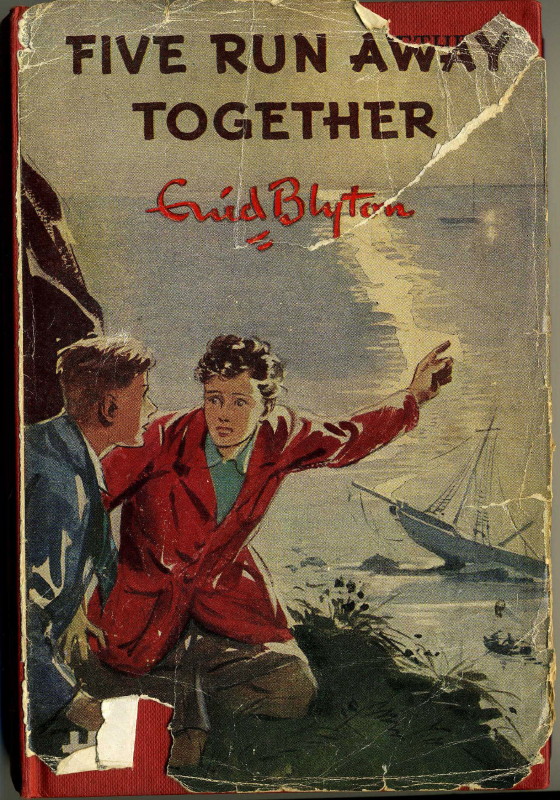
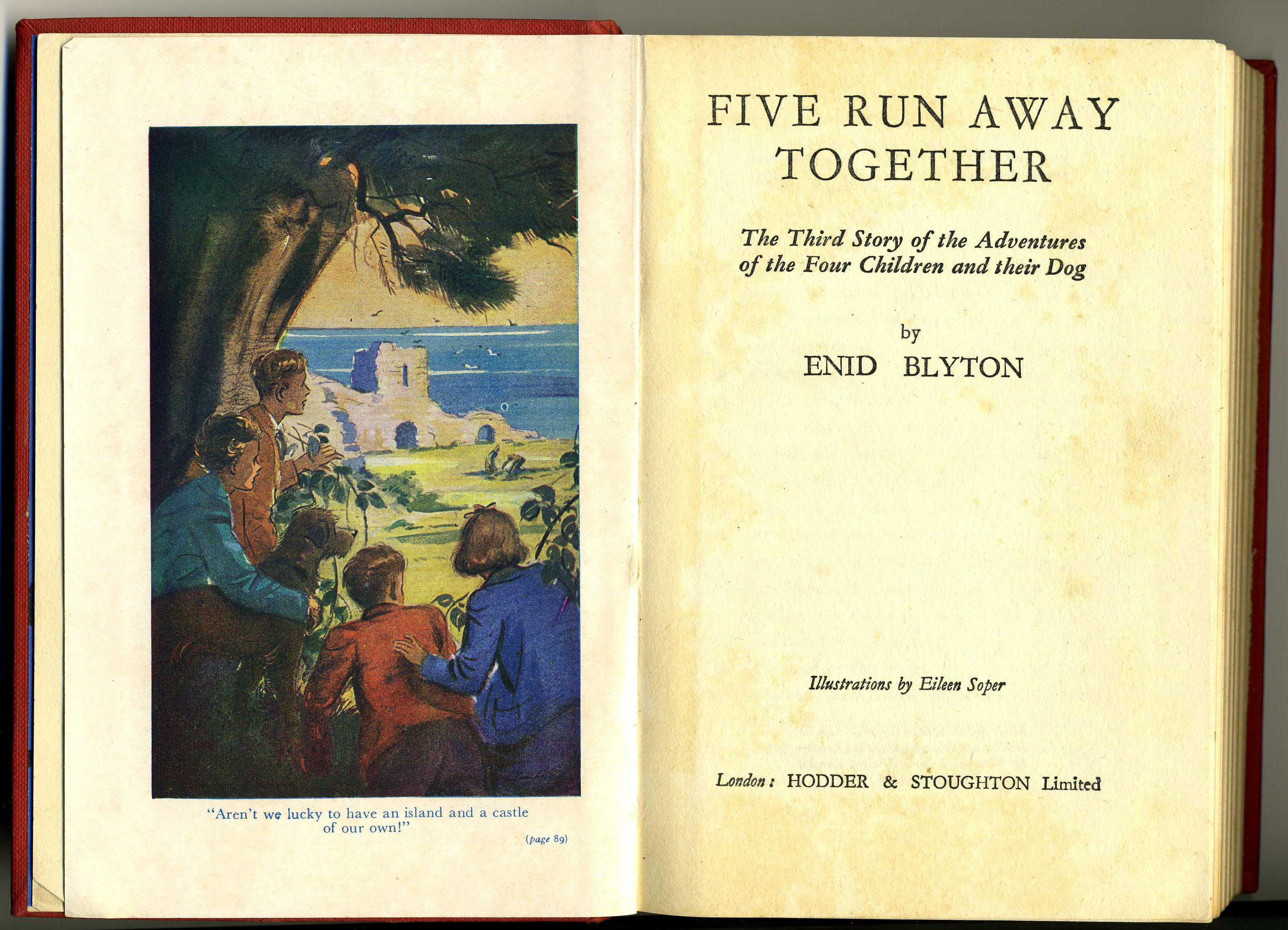
Enid Blyton is mentioned again and again – the oft-maligned, scarily prolific but omnipresent doyen of children’s fiction whose stories punctuated childhoods throughout the 20th century, before going out of fashion and then being revived in controversially updated form.

Blyton wrote around 800 books, including her most famous creations, Noddy, The Magic Faraway Tree, Malory Towers, The Famous Five and The Secret Seven, and sold more than 600 million copies.

Despite criticism that the books were poorly written and were both racist and sexist, the stories themselves linger. Fantastic yarns and tales of independent children having sometimes dangerous adventures without adult interference were the stuff of dreams for any youngster with a hint of imagination. There was magic in the branches of trees and smugglers at every turn.

“I just wanted to be The Famous Five and I identified with these characters,” Whiting says during a Perth Writers Festival session exploring the books which gave authors the reading bug.

“I could relate to them. They seemed very real but they were also just out of reach. I wanted their life and I wanted their freedom and the way they could go off and do things and solve mysteries and have adventures. I lived through their adventures.

“I can’t go anywhere now – if there’s a little sandy cove or a rocky cove, it’s always Smugglers Cove. If there’s a boat moored out just offshore, particularly at dusk, I wonder what they’re up to – and if I see a man with a lantern: very, very suspicious.”

Brian Falkner, whose bestselling novels for children and young adults include The Real Thing, The Flea Thing, Brainjack and The Tomorrow Code, admits to a similar urge.

“I can’t walk into an older panelled-wall house without having a temptation to go and just tap on the panel and see which one conceals the secret passage,” he confesses, to laughter.

Both Whiting and Falkner say Blyton not only hooked them into reading but subconsciously helped forge the kinds of writers they later became. Falkner also voraciously consumed the Willard Price adventures before moving on to adult thrillers by Alistair MacLean at the age of 10.

“The excitement and the suspense in those kinds of books really shaped me,” he says. “I wouldn’t say that now as a writer I consciously try to imitate any of those – Willard Price, Enid Blyton or Alistair MacLean – and not even subconsciously, but I think they actually shaped my brain as I was growing up into what I expected the stories to be and the way I want the stories to work. So I think there are natural elements of those stories that come through in what I write now.”

In his only conscious reference to his childhood favourites, Falkner’s next book will include a deliberate tribute to Enid Blyton – a secret passage.

Whiting says she too has been influenced by Blyton.

“When I think about all the books that really resonated with me they’re ones where as a child reader I really identified with the characters, and they were quite real stories,” she says. “I think that’s reflected in my own writing. I am much more attracted to books that have real characters and real situations and real adventures. That’s the main influence but it’s very subconscious.”

Wendy Orr, of Nim’s Island fame, says she never liked Enid Blyton but adored Johanna Spyri’s classic story of Heidi, the little Swiss girl sent to live with her grandfather.

When Orr was five and living in France, her mother read Heidi to her for the first time. She was in heaven when her family travelled to Switzerland soon after and she was able to see for herself the mountains she had imagined Heidi climbing.

Another great love was AA Milne’s Winnie the Pooh, Now We Are Six, and When We Were Very Young. At an early age, Orr memorised Milne’s poems and fell in love with the rhythm of the language.

“I think that rhythm has gone into my brain. Rhythm is so important to me in my writing. I didn’t really know it was important to me, but people comment on it.” So set is Orr on rhythm that when she writes, she records her words on Garage Band and lies on the floor listening to check how they sound.

Andrew Joyner, who nominates James Marshall’s George and Martha stories – which followed the gentle and kind friendship of two hippos – as his childhood favourites, says he loves the simplicity of the illustrations in both those stories and the comics he consumed as a child.

“The ability to capture expression in as few strokes as possible really stuck with me. I always gravitated towards those types of drawings,” he says.

So can you recapture the magic you felt as a child by re-reading your favourites as an adult – or are the memories better left intact?

Falkner says that after revisiting Willard Price and being bitterly disappointed, he’s frightened of reading Enid Blyton again and having his illusions similarly shattered. It’s the same for most of them. They’re worried they’ll see the flaws too clearly and destroy the magic.

“I have this very, very precious memory of Enid Blyton and how wonderful it was and how it made me feel, and I am terrified if I read it again as an adult it will just evaporate, and I’d go ‘What kind of rubbish is this?’ I don’t want to wreck it because it is such a precious, precious memory for me, particularly Enid Blyton and The Famous Five.”

“I actually don’t want to re-read Heidi either,” says Orr. “I’m too afraid that it wouldn’t have that feeling of being there and feeling ‘Oh, if only I could just do one thing to help that character.’”

Whiting, however, has dug out her 58-year-old copy of Five Go Down to the Sea and happily tucked into it on the train recently.

“I was worried,” she says. “I was expecting to hate it. But I found it really interesting for lots of different reasons – mainly because it’s a wonderful commentary of life in the ‘50s.”

Asked if she agrees with revisions of Blyton, she says that other than corrections to topography and punctuation, they should stay as they are.

“They’re a wonderful snapshot of the time and they should retain that integrity. You wouldn’t go and change Jane Austen or William Shakespeare. I think today’s kids would still find The Famous Five accessible. Some of the values are different but they’re not that dissimilar.”

Joyner, who points out that Blyton may not have written well but created great stories, loves what he calls the generosity of storytelling in children’s books. He says it’s important to remember that children read books differently to adults, and that it’s a different feeling altogether reading a children’s book alone as an adult, and reading that same book to a child.

He says he now reads the Harry Potter books to his own son and although some bits don’t quite work for him as an adult, children love it.

It’s Harry Potter, the panel agrees, that the kids and young adults of today will fondly remember thirty or forty years hence. They hope others like Blyton, Tolkien, Roald Dahl and more contemporary writers will continue to feature, but Potter, they feel, is a certainty.

“It’s burning too brightly to go away,” says Falkner.


Books and authors discussed included: Enid Blyton, James Marshall (George and Martha), Roald Dahl, JK Rowling’s Harry Potter series, Tolkien’s Lord of the Rings and The Hobbit, the Willard Price adventures, The Hardy Boys, Where the Wild Things Are, The Silver Sword, and The Jericho Project. 

Sue Whiting grew up without a book culture in her home – the only thing she remembers her father reading is the form guide. However, she went on to become a prolific reader and writer for children and young adults. She has written more than 60 books and lives by the sea south of Sydney. She is an editor at Walker Books and her latest novel is Get a Grip, Cooper Jones.

Brian Falkner knew at school that he wanted to be a writer. He grew up in New Zealand and worked as a reporter, advertising copywriter, radio announcer and internet developer before following his childhood dream and becoming an author. He now lives on the Gold Coast. His most recent book is The Project.


Wendy Orr was born in Edmonton, Canada and travelled extensively with her family as a child. She carried her book collection with her every time she moved and still has all her childhood books. She is the author of
Nim’s Island, which was made into a film in 2008. Her most recent children’s novel is Raven’s Mountain. She lives in country Victoria.

Andrew Joyner is an illustrator, cartoonist and author who is published nationally and internationally. He has illustrated books by, among others, Wendy Harmer, Ross Campbell, Ursula Dubosarsky, George Colombaris and Gary Mehigan. He lives in South Australia and his latest book is Boris.


More from theh 2011 Perth Writers Festival >

Posted in 2011 Perth Writers Festival, Blogwax, The Buzz | Tagged , , , , , , , , , , , , , , , , , , , , , , , , , | 5 Comments

Winner, ‘Spotlight’ Challenge

Congratulations to Tamara Hunter, winner of the ‘spotlight’ challenge with the condensed psycho-drama, ‘Beyond the Pale’.

Tamara wins One Year To A Writing Life: Twelve Lessons to Deepen Every Writer’s Art and Craft by Susan Tiberghien.

What the entries this month lacked in numbers, they certainly made up for in quality and variety – in both form and genre. Thank you to those who entered.

Thanks also to this month’s guest judge Keith McDonald, a 42-year veteran of the newspaper business who has worked as a reporter, features writer, liftout editor, columnist and sub-editor. He is currently writing a novel and short stories.

Keith was given only the titles and text of each entry, without author names, and agreed not to read the posted versions so was not aware of ‘likes’ or comments. See below for his thoughts on this round.

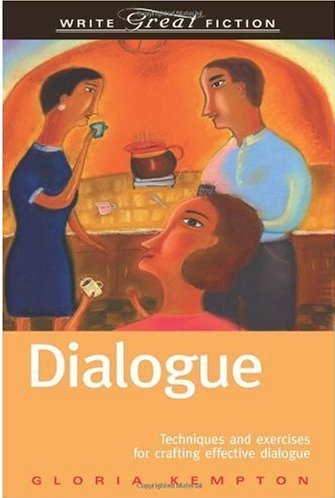
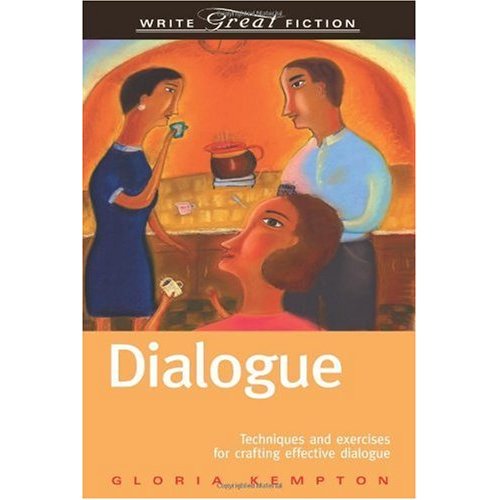
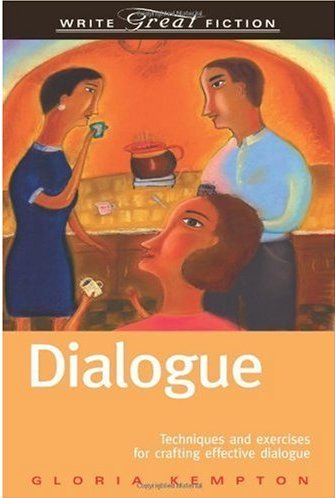
The next 500-word challenge is now open. Write up to 500 words around the theme ‘woman’ (in honour of International Women’s Day) and send them to waxings.blog@gmail.com by midnight, 4 April 2011 (AWST, GMT+8). The winner will receive a copy of Write Great Fiction – Dialogue by Gloria Kempton.

****

Judge’s comments:

Andrew O’Hagan makes Marilyn Monroe’s dog his central character in his latest novel and in this short story something similar is going on with the central character, a cat named Theobold, although it’s not obvious he is a cat until near the end. That’s when he climbs on the fence at night and “yowls” to the great annoyance of his owner, Ellen, who threatens him with “cut-rate kibble for a week”. This uncertainty over Theobold’s identity adds an air of intrigue and enables the reader to see him as both animal and human.

Theobold is a great character and despite the 500-word limit, the author brings him very colourfully to life with his pomposity and irritation at Ellen’s failure to appreciate his talents. A real star in his own mind. He disdainfully endures his owner “sweeping” into the room and telling him to take his dirty feet off the couch. Then the big finish with Theobold acting out a feline Hamlet on the fence and sacrificing a week’s good food for his Art with a capital A. He may be a cat but he feels very much like one of those delusional thespians of minimal talent who think they are God’s gift to acting.

The writer appreciates the limitations of 500 words and doesn’t try to do too much. The result is a beautiful piece of focused characterisation and a tight story that works beautifully.

Posted in 500-word challenge, Blogwax | Tagged , , , , , , , , , , , , | 2 Comments

Risking All For The Story

Someone asks David Whish-Wilson if he is “a dead man walking”.

We all laugh, then quickly fall silent. We wait to hear David’s answer because the suggestion is not outside the realm of possibility.

The crime fiction author has been telling this audience at the Perth Writers Festival about his experience researching the 1975 death of Perth madam Shirley Finn, one of the most notorious unsolved murders in Western Australian history.

We now know his interest was piqued after reading the file on the murder investigation and talking to police sources. He wondered why Finn’s body was not hidden after the murder but left out “on display” like a warning to unknown others, why the killer made such little effort to cover their tracks, like they knew they would get away with it, why police didn’t make more effort to find out what happened.

We have imagined the tension as he interviewed sources in crowded cafes, while walking down the street and in the privacy of their kitchens – never on the phone – trying to stay safe and to avoid tipping off the bad guys that he was “asking the right questions of the right people”.

And his relief at, perhaps literally, dodging a bullet when a contact advised him not to approach a certain police officer because “he’s bent – you speak to him, you’ll be shot”.

It is the stuff of a classic thriller, in which a crusading journalist risks all to uncover the truth, where he knows he has a target on his back but keeps going, driven by a promise made to the victim’s son after meeting him in a prison writing class.

So we wait, uncertainly, for David’s response. He flashes a quick smile – or is it a grimace?

“Writing this book had its moments,” he says. “There were times when I was genuinely afraid.” He pauses. “I felt it was worth pushing on with it.”

A few days earlier, he told me it had quickly become apparent that everyone in Perth had a theory as to why Shirley Finn was murdered and who had done it. “Nobody had a monopoly on the truth,” he said. “There were many competing versions, competing narratives.

“The struggle for me, at that point, was how do I weigh up what I regard as my obligation to the Finn family to get as close to the story as possible without getting shot or sued, with this idea of competing truths, while also clothing it in a crime fiction narrative which has some kind of resolution, given that it is an unsolved murder?’”.

There was no proof, no resolution. Yet David still had to deliver a crime novel that would satisfy a reader who knew nothing of the Finn case.

“Obviously the book has been released around Australia and New Zealand. It doesn’t matter to someone in Auckland or Hobart or Townsville, if they buy the book, whether it’s based on a true story. They want a good read,” he said.

“I was trying to create a story that was an entertaining read for crime fiction fans. The way I did that was by taking a more social crime perspective.”

In his novel, David employed three fictional characters – a judge who believes in the power of the law, a police whistleblower suffering the ire of betrayed colleagues, and a hit-man – to explore the different aspects of Perth society in the 1970s, the different classes and different groups.

“By balancing out those three characters I was able to achieve what I was trying to say – exposure of some of the policing culture around Perth in the 1970s but also finding an ending which was satisfying to the crime fiction reader,” he said.

David is currently working on another book drawing from his research into the Finn murder, this time focusing on WA’s booming resources sector in the late ‘70s. It is something he had not originally planned.

“For me, there is just more to tell,” he said. “The more I thought about it, the more frustrated I became about the fact that it hasn’t been said yet. There were these big gaps in the public record, things like police corruption and what have you.

“I want there to be something on the public record and non-fiction at the moment is quite a difficult medium to get these things across. Fiction is my way of saying more.”

At the festival, we wait for the rest of David’s answer. Is he a “dead man walking”?

“When the book was going to come out, I spoke to a couple of people whose opinion I respect and I put it to them: ‘what do you think will happen?’” he says. “My main worries were, obviously, personal risk but also defamation. They both, thankfully, said, ‘Look, I think, once the book comes out, you will be okay’. 

“This advice turned out to be correct advice – so far.”


David Whish-Wilson lives in Fremantle and teaches creative writing at Curtin University. His first book, The Summons, was published in 2006. Line of Sight, a novel based on the Shirley Finn murder, was published in September last year. David was a guest writer at the Perth Writers Festival.

More from the 2011 Perth Writers Festival >


Posted in 2011 Perth Writers Festival, Blogwax, The Buzz | Tagged , , , , , , , , , , , | Leave a comment

Science Is The New Art: Annie Proulx and Tim Flannery

Guest post by Keith McDonald

This session about the intertwining of science and art fired up when both Proulx and Flannery related personal stories about how their engagements with the environment and its wildlife had inspired them. Several times, they made the point: you can’t experience these sorts of things in the city.

That point was emphasised as we made our way out the exit after the session and a writer from Tasmania complained about how inspiration had deserted her since she moved to Perth.

Proulx — I take comfort from knowing that she didn’t publish her first novel until she was in her 50s — said that she was “incredibly interested in place”. “Every story, every poem, every dinner conversation starts with place,” she said. “It’s where we come from, what makes things happen…It depends on place. That’s where stories come from.”

And it was places away from cities that they described.They both talked about Wyoming, where Proulx lives on 640 acres of wetlands and which she writes about in her new book, Bird Cloud. Flannery said Wyoming reminded him of the New South Wales Western Plains.

Flannery lives on the Hawkesbury River, north of Sydney. “There you engage more with the world than you can in a heavily built environment,” he said. “You feel the weather on your skin. It’s very real.”

He talked about “one of the most moving experiences” of his life when he watched two eagles locked in some sort of mating ritual crash together into the river and he took his boat out to rescue them.

Another Hawkesbury story involved a 2-metre king brown snake which he often saw around his house. He used to be scared of it but one day he was confronted by it and he and the snake just looked at each other. “I realised we had an understanding,” he said.

Proulx had her own eagle story about the time she watched an eagle surfing on the back of a big fish it was trying to catch. “You don’t get to see that sort of thing in an apartment in the city,” she said to a roomful of city people.

She also revealed that one of her favourite habits when she is wrestling with plot or characters is to go for a walk. “There is something about walking and striding out and looking into far distances that sets the mind on fire,” she said. “Ideas flash in like tsunamis.”

But us city folk in the audience seemed rather preoccupied when it came to question time with trying to understand the scientific mechanics of climate change. Although Flannery gave a couple of great scientific answers, somehow I couldn’t “feel the weather on my skin”.   


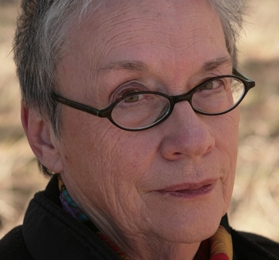
Annie Proulx was born in Connecticut but she has spent most of her life in Vermont. She wrote her first novel, Postcards, in her 50s and followed it with The Shipping News, which won the Pulitzer Prize for Fiction in 1994. Her short story Brokeback Mountain was published in 1997 and was later adapted into an Academy Award-winning movie. Annie was a keynote speaker at the Perth Writers Festival.


Tim Flannery is a writer, scientist and explorer. He has written many award-winning books including The Future Eaters, Throwim Way Leg and Country He is a member of the Wentworth Group of Concerned Scientists, the National Geographic Society’s Australasian representative and a director of the Australian Wildlife Conservancy. In 2007, Tim was named Australian of the Year. He was a keynote speaker at the Perth Writers Festival.


More from the 2011 Perth Writers Festival >

Posted in 2011 Perth Writers Festival, Blogwax, The Buzz | Tagged , , , , , , , , , , , , , , | Leave a comment

Second Novel Squeeze

Guest post by Tamara Hunter

Toni Jordan had what was, by any measure, a dream run with her satirically funny debut novel, Addition. Sold into 16 countries, it featured as ‘Comedy of the Summer’ on Richard and Judy’s Book Club – the British equivalent to the trend-setting Oprah version – and overnight shot from 280,000+ on the list of Amazon top sellers to 21.

Glowing reviews, interviews and the sale of film rights followed. But when the brouhaha faded away and Jordan sat down to write her second novel, the nightmare began. With others standing around expectantly, waiting for her to produce something as good or even better, Jordan began to sweat. Sitting at her computer day in, day out, she found that contrary to the relatively easy, free-flowing experience she’d had the first time around, she was having to force herself across what seemed like an abyss.

“I sat there for a year,” she said at the Perth Writers Festival. “I was second guessing myself and I was thinking about what everyone would think and thinking ‘How did I do this the first time?’ My husband would come home from work, look at me sitting at the computer and say: ‘You look like you’re constipated’.”

Her mother didn’t help by ringing her one day and randomly asking her the name of ‘that Gregory Peck film’.

“I said ‘To Kill a Mockingbird?’” said Jordan. “And she says ‘You know that woman never wrote another book – one book,  that was all she ever wrote.’ And then she goes ‘Margaret Mitchell, same thing, only one book’. I said ‘No, not quite the same thing, she got hit by a bus, but anyway’. But I think she was actually trying to say, in her twisted way, you’ve written a book – just relax, it’s okay.”

When Jordan eventually handed the manuscript to her publisher, she got the reception she’d been dreading.

“He used this very technical editing term – let me see if I can remember it. Oh yes: God awful.”

But rather than crushing her, the reaction – along with a few sage pieces of advice as to how she might revamp her characters and plot – galvanised her.

“Somehow that was the thing I’d been worried about for over a year, that people wouldn’t like it and it would be awful,” she says. “Suddenly I had nothing else to worry about.”

By the time Jordan had made the train journey home she had already decided how she was going to fix it. She completed a redraft within four months and the result is her second novel – the romantic comedy heist Fall Girl. Although Jordan still regards it as her second draft, the final novel doesn’t have a single sentence in common with the first draft. In the rewrite, she introduced six new characters, reversed the gender of key characters and layered another plot over the first one, which became only a minor part of the story.

Jordan said she was a big believer in the power of the subconscious to work things out, and that even as she was writing her tortuous first draft, the back of her head was working out how it really should be.

 “This was such an interesting experience because I am so new to this whole creative writing thing,” she said. “Addition was the first piece of creative writing I’d ever done. I didn’t start until I was nearly 40 – I had never done anything creative before. I think I am still finding my own process.”

Established novelist Melina Marchetta, who wrote the much-loved, award-winning Looking for Alibrandi, also struggled to get over the second novel hurdle. It took her 11 years to attempt her second book, Saving Francesca.

Asked about who she was speaking to when she wrote, Marchetta said she avoided writing for anyone else, instead focusing on the character she’s writing about and blocking out everything else.

“The only time that I didn’t try to block it out was after Alibrandi – and I didn’t write for 11 years,” she said. “So that was a lesson to me. I’m not saying that I’ll never get over the fact that I didn’t produce a book in 11 years, but Alibrandi was kind of in my life. It was bigger than me, and it’s probably the novel that I can speak about the least because I didn’t know what I was doing. So I produced something that people loved and they’d say ‘Do it again!’ and I’d think ‘God, I don’t know how I did it the first time’.

“Whereas with the other books, I love those – I mean I love Alibrandi, don’t get me wrong, I’m not saying I don’t but I don’t know how to talk about it in the same way as Francesca on because I am so aware of my process and I love the fact that I’m aware of my process. And so I just trust what I’ve done, and I think it’s worked for me.”

Toni Jordan is a former research assistant and molecular biologist who went on to marketing, copywriting and a  regular column in The Age newspaper. She spent seven years in the 1980s examining one protein in horse blood to help determine parentage in racehorses – only to be gazumped by the discovery of DNA testing in the 1990s.

Melina Marchetta is an award-winning novelist and former teacher. She burst onto the Australian young adult literary scene in 1992 with Looking for Alibrandi, which was subsequently made into an award-winning film starring Greta Scacchi, Anthony LaPaglia and Pia Miranda. Her other novels are Saving Francesca, Jellicoe Road, Finnikin of the Rock and her latest book, The Piper’s Son.

More from the 2011 Perth Writers Festival >

Posted in 2011 Perth Writers Festival, Blogwax, The Buzz | Tagged , , , , , , , , , , , , , , | Leave a comment