Oz Publishers Desperately Seeking Romance

Guest post by Nikki Logan

I recently attended a national Australian writers’ conference in Melbourne and a national American writers’ conference in New York City just one month apart and thought what a magnificent opportunity for a bit of good ol’ compare and contrast

Romance writing is big business in Australia—one leading global publisher reportedly signed 55 new romance authors last year; 24 of them were Australian (Go us!). But this is not the same as saying romance is big business for Australian publishers. The vast majority of those Aussie authors are writing for overseas markets/houses and so when Australians buy romance novels (as they do in vast quantities), chances are it’s from a US/UK house even if the author is Australian.

*cough* Awkward.

Aussie publishers are seriously late to the romance party. Random House, Hachette, Allen & Unwin, and Penguin all spoke and took pitches from 350 writer delegates at August’s Romance Writers of Australia national conference. Just three years ago you couldn’t pay them to attend, now they’re scrabbling over each other for a spot. Either they’re tired of this enormous revenue stream going to overseas houses (even the overseas branches of their own houses) or they’ve realised they have a glaring gap in their inventory.

Across the Pacific it’s an entirely different story. The US national conference of the Romance Writers of America was crawling with publishers and agents. They know what a lucrative market romance is and they aggressively target the content producers. They gave away pallet-loads of their product to the 2000-strong delegates, they offered spotlight sessions to introduce their house and their publishing packages to authors, they saw hundreds of writers in crowded pitch sessions. They contributed workshops, they postulated and argued and forecast on industry panels, and they got their brand repeatedly in front of author faces. In other words, they attended conference with a ‘what we can do for you’ mentality and they actively interfaced with authors in a way that made them very accessible.

Now, we all know that ‘what we can do for you’ is just pretty packaging for ‘what you can do for me’ but it’s a heck of a lot better than the silent message Australian authors have been getting for years from our own publishers, ‘we don’t want what you have.

Except now they do. A lot.

There was a heap of focus on ePublishing at the Australian conference.  At home, issues relating to geographic restrictions mean many Aussie authors simply are not available in e-book form in their own country where we do our best promotion. Aussie e-book buyers are cracking the regional restrictions on their readers or utilising US third-party address services to register their devices so they can download the books they want to read. They’re finding workarounds. Some of the regional challenges are contractual, some the expense of conversion for Australian publishers who don’t have a massive romance revenue line to offset against. Some of it is the very late start that Australia got in the e-armsrace.

ePublication is old news in the US market, already just another format, albeit a dominant one. Self-publishing was the topic on everyone’s minds in New York. I heard that ‘self-publishing will become the new slush pile’ and that the ‘crème will rise to the top’ and create a new generation of popular authors. I heard that the e-boom was reminiscent of the advent of the ‘trade’ or ‘mall’ paperback in terms of the leap in affordability and accessibility and how that hadn’t hurt the industry any in the long term. I heard how traditional publishers may have put their fingers in their ears and gone la la la as they saw their own industry rapidly heading in the same direction as the music industry a decade before it. I heard how hard it is to achieve any kind of breakthrough in an e-book environment where there are 500,000 self-published ebooks on Amazon.

Through all of that, one thing has become glaringly obvious to me:

  • ePublishing is not a threat to writers (at worst it’s a threat to print models)
  • Self-publishing is not a threat to writers (at worst, it’s a threat to traditional publishing models)

Both are opportunities for writers. And different writers will have different kinds of success just as they do now.  It just might be a different sub-set of writers having the success for the next decade. (And maybe that’s what’s got the published author fraternity so angsty… They’ve worked hard to dominate in the paradigm they understand. If they fail to understand this new one will they get over-run while they flap their hands?)

Let the publishers deal with the threats to their various models. The savvy ones are already getting with the program and being smarter—and by smarter, I mean smarter than the authors.

Big Aussie regency author Stephanie Laurens said the savvy pubs are now ‘luring’ e-rights with a print-rights carrot, something the e-only or self-only models can’t easily offer. But she believes the private, long-term intent is not to print much (or possibly at all).

In the US, number-cruncher author and keynote speaker Madeline Hunter said self-publishing has contributed to a ‘collective sigh of relief’ from authors because their ‘survival no longer rests on their relationship with their publisher’. But she also warned that success as an author will come from building readership (distribution) not from making quick bucks now, and that the thing traditional publishers currently still have over everyone else is distribution.

Currently.

Despite some major self-publishing success stories (Amanda Hocking’s already worn-out name gets dragged-out-and-dressed-up a lot in these discussions), it’s still hard for already published authors to trust and believe that they can disengage from traditional publishing models.  Trust is whipped-puppy slow to return in a group of individuals who have spent a lifetime being told you can’t do it without the big pubs. Yet ironically they are the most likely to succeed simply because of their existing profile.

Author, motivational speaker and ex-Green Beret, Bob (Warrior Writer) Mayer, spoke at the Australian conference and told us about the 80,000 books he flogged in a month as a self-publisher, though he would be the first to argue that there is no such things as self-publishing because ‘you can’t do it professionally by yourself’. But Bob is not your usual author. The man speaks in sound bites, aggressively targets writers as buyers with his craft-books, is better endowed than most writers with business acumen and was highly trained by the Green Berets in how to take strategic risks. He is almost by definition the anti-author.

Hi, I’m Bob Mayer and, by the way, wanna buy a book?

But New York and Melbourne conferences clearly showed me that the ‘traditional’ publishers are now fighting back. They’re fighting back by reminding everyone that ePublished-only authors have access to their part of the sales pie while their authors have access to the whole pie (although they will admit the pie is rapidly changing shape). They’re fighting back by luring e-rights with the carrot of print publication. They’re fighting back by changing their royalty structures. One can only assume they’re fighting back by joining forces with the enemy, previously their competition.

And when big publishers start to have lunch together, it’s hard for authors not to believe they’re the topic of discussion. But Mayer would urge us not to treat publishers like the enemy and to make ‘courageous choices’.

‘You may fail,’ he told a room full of published authors in Melbourne who looked back at him with flat-lined lips, ‘but what if you succeed?’ 

Nikki Logan lives in Western Australia and is working on her 10th romance novel for Harlequin Enterprises.  She is also writing an e-book about ‘The Chemistry of Reading’ . 100+ of Nikki’s tweets from the 2011 RWA (US) National conference in New York and the 2011 RWA (Aus) are archived in her Twitter ‘favourites’ (@ReadNikkiLogan)

Posted in Blogwax | Tagged , , , , | 1 Comment

Find The Music In The Valleys

Guest post by Mark Cunningham

Music is one of those things that writers have to decide.  It’s kind of like Beatles or Stones.  I am a music guy, that’s all there is to it.  For the record I am listening to a very tasty Phish soundboard as I type. 

Now, a lot of those who don’t write to music choose silence to limit distractions.  Where do they write? I can’t help but wonder.  Silence is something I do when I’m sleeping, both by nature and circumstances.  If I am looking to check into writer land, nothing does the trick virtually instantaneously like tunes. 

I suggest to those who choose whatever silence they have the opportunity to obtain over music, that perhaps they simply have not found the right kind.  Music, like love and beverage, has all sorts of textures and flavors.  There is a certain type of music that is good for writing, although it is clearly different for each individual. 

For me, music skims the story, like a rock going across the water.  It’s there, keeping pace in between skips, but it lands now and then, making a point.  When it is clicking, my fingers are jamming with the music, laying down words directly from my muse.  Again, I heartily recommend it.  You just have to find the right skimming music for you.

The first thing about skimming music, is that it shouldn’t be the main event.  Skimming music needs to be able to assume a backseat when required.  This typically suggests music that is more instrumental than lyrical.  I love Dylan, but when I am writing, Visions of Johanna has a chance of getting in the way, as it’s mostly landing.  The same thing goes for Frank Zappa, unless he is just playing guitar, in which case he keeps it very airborne. 

My personal preferences are jam bands and jazz.  Both are ideal for putting on headphones and skimming.  Both employ typically longish pieces and both are liberal with time changes to keep it interesting.  I find myself losing myself in my fingers as a good jam goes on.  Usually, a lot gets written.  Classical music is also perfect for skimming.  It flows and has very nice transitions.  Mozart, Bach and Schubert have always worked well for me.  I also wrote a lot of a short story on a train once to Carmen.  I have found that no matter the flavor of the music, when the texture is live, it seems to work better for skimming.  Live performances seem to promote spontaneity and improvisation. 

One final note on skimming, I suggest it for writing, not reading.  When you are ready to read what you have written, especially during a long skim, it’s time to turn the music off.


Mark Cunningham is a US-based writer and sometime collaborator with Waxings. This extract is from a series of posts on a music-related writing exercise he calls ‘Over the Wall’. Read more about the exercise and Mark’s other projects at his blog, The Wombat Returns.


Posted in Blogwax | Tagged , , , , , , | 4 Comments

What Is Cyberpunk?

Guest post by Alex Adsett

Cyberpunk is a subgenre of science and is generally a style of writing and way of telling a story that is heavily influenced by the noir detective fiction of the forties. More than this, it takes the ‘punk’ from its common theme of disenfranchised loner fighting the establishment for personal freedom or just to get by.  It is particularly identified by using punchy language to throw the reader headfirst into the story and expects you to work out what is going on in your own time.

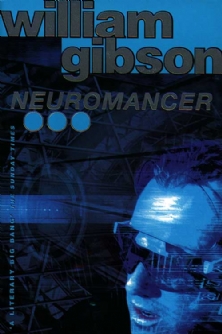
Original cyberpunk was concerned with futuristic worlds altered by cyber or nano technology. Unlike the original science fiction concerned with spaceships and aliens, cypberpunk told stories set in barely recognisable futures and felt no need to explain the technology or give the reader any training wheels into the world they were entering. Although there were some earlier influences, the breakthrough cyberpunk book was Neuromancer by William Gibson. First published in 1984, it was set in a virtual matrix long before the idea of the internet entered popular culture.

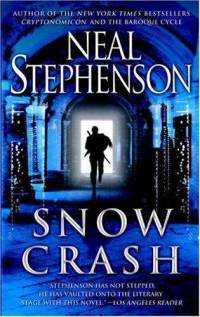
Arguably the biggest cyberpunk writer is Neal Stephenson, his seminal works Snowcrash and Diamond Age are more than two decades old now, and still amazingly prescient about the world we find ourselves living. With smartpaper and tablets, the educational possibilities of technology and monopolistic controls, Stephenson took the ideas of what was possible and imagined worlds in which they were real.  Like the stories of Jules Verne a century beforehand, it is staggering to watch the stories told by the cyberpunk writers coming true.

As the genre grew and more writers turned their hand to it, sub-subgenres began to appear: Post-cyberpunk (using the same punchy style, but moving away from the technology-rich future landscapes) is where William Gibson is now writing; Cybernoir (using the writing style and technology to move the genre back to detective and crime stories) has been brilliantly explored in the Pashazade trilogy by John Courtney Grimwood; and Organic cyberpunk (Moving the technology from ‘cyber’ to ‘biological’, playing with genes and chemicals) is the realm of Jeff Noon, particularly his early work Vurt.

Unlike the more recent steampunk genre, which concerns itself more with the aesthetic trappings of the 19th Century, Cyberpunk and its permutations is a style and way of writing.  Despite the chaos and disorientation of starting each book­ – which is part of the fun – as you absorb the technology and language while trying to decipher the story, a richly layered world emerges that is completely foreign, yet familiar.  Cyberpunk harks back to the pulp fictions of decades past and uses them to tell stories of the future we’re racing towards.


Alex Adsett is a Brisbane-based publishing consultant. She is also on the management committee of the Queensland Writers’ Centre and the Copyright Expert Reference Group of the Australian Publishers’ Association. For more about Alex, visit her website alexadsett.com.au.


Posted in Blogwax | Tagged , , , , , , , , , , , , , | 1 Comment

Blogging for Art or Profit

Why don’t more writers’ festivals do in-session food?

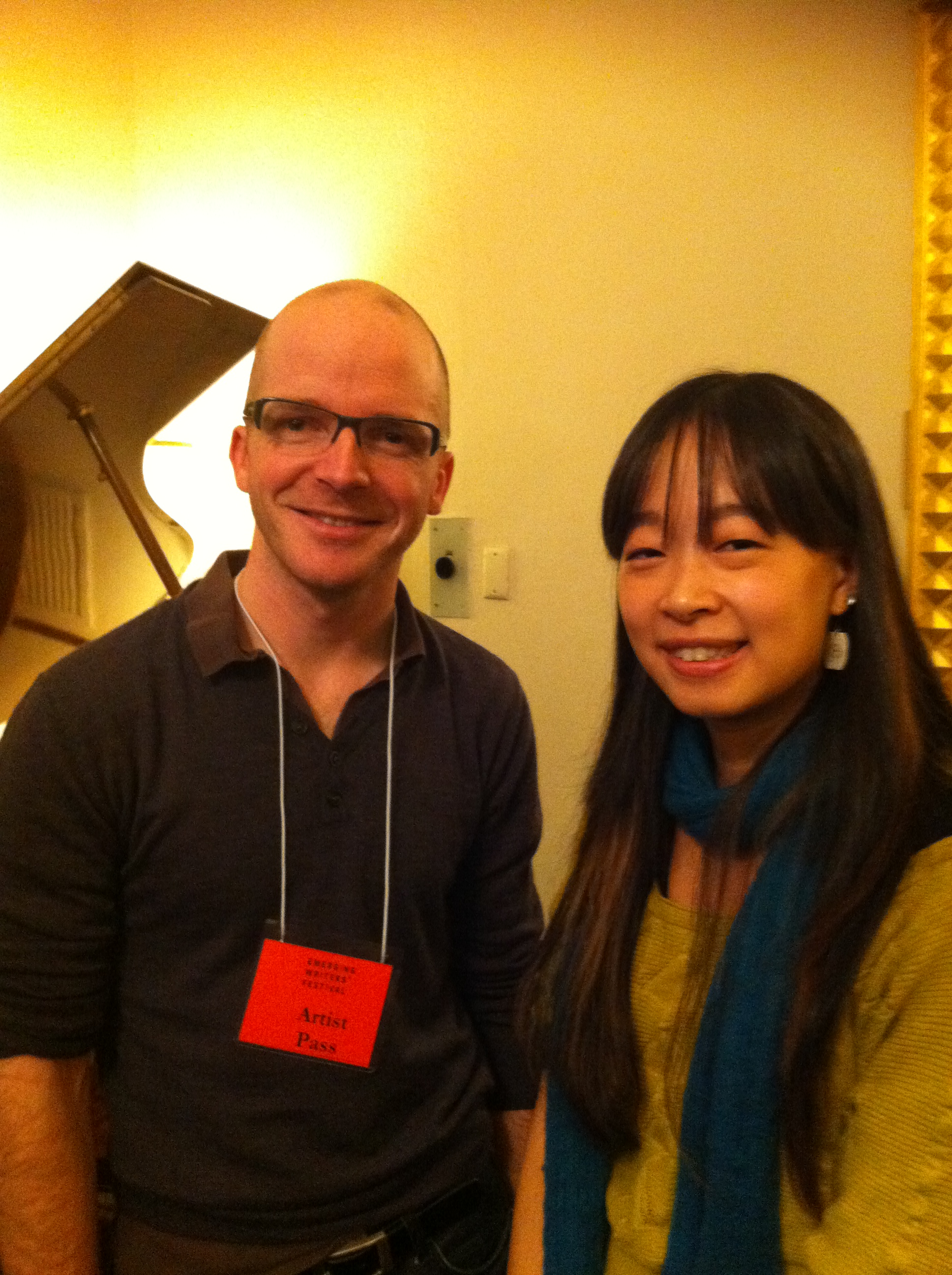
Philip Thiel handed out slices of pork terrine before his session at the Emerging Writers’ Festival and they were DELICIOUS – not least because I’d skipped lunch to talk to interesting new writer friends and was feeling a little faint.

I paid close attention to everything Thiel said after that. *Festival organisers take note*.

Admittedly, I would have paid attention anyway.

Thiel and Jessica Au jointly moderated a discussion about blogging. They explained their own different motivations – Thiel (to be interesting), Au (marketing/profile) – and engaged the blogger-dominated audience in lively debate about issues like content and making a living from blogging.

In terms of content, Thiel represented the personal/confessional blog approach while Au provided insight into organisational blogs.

Thiel pointed out that blogs started out as an extension of journal keeping and often contained what he described as “almost excruciatingly personal” content.

“That traditional personal voice is still really dominant and I think it’s not going to go away because as soon as people try to get rid of it for personal reasons or branding reasons, people do stop reading the blog,” he said.

“In any case, it’s a great opportunity for people to be radically personal and lots and lots of blogs I read are not about politics, not about criticism, but about what people had for breakfast.

“The fact that there is a global audience for this material means that there are possibly millions of people wanting to know that you had a cup of tea in Collingwood and why not? What’s wrong with that? And if they want to go into more detail about that cup of tea, they can.

“What if that is actually the material that is of most interest to readers? Are we going to impose on them something more authoritative and declarative?”

He cited an article in the literary journal, Meanjin, in which the author described her daily reading of a blog by an unemployed design graduate in the United States. The blogger posted news of her job search, about her work in a cafe, doodles or photos taken while walking her dog, thoughts about books she’d read and quotes about the need to persevere.

Thiel quoted: “Her talent is clearly evident. She never complains about her situation. She just keeps plugging away and, in so doing, is leaving a lovely little curated garden that, I, on the other side of the world, can diligently read every day without her even knowing that I’m crossing my fingers for her.”

“I was incredibly moved by what was a beautiful summary of how those trivial, small but compelling details of our lives are often the very things that we want to read when we log onto our blog-feeds,” Thiel said.

“If we are going to have little lessons, one that I might offer is, don’t be too worried about the topic of your blog. There is an audience for whatever preoccupies you.”

Au, who has blogged for Meanjin, said many organisations had identified blogging as a form of communication they should be involved in. But this posed additional challenges to the blogger.

“I was mindful in blogging that it wasn’t just my voice, I had to take on the interests of the journal and put my agenda in that as well,” she said.

“The thing that I did have trouble with was the question of voice. The blogs I like reading have a strong character and I think that’s something that’s really overlooked by people that get into blogging. They think it’s just like writing an article, which it isn’t necessarily.”

Au said a lot of organisations also didn’t have the resources to dedicate to a strong blog presence. Their hunger for content provided opportunities for writers to do guest posts, cross-reference their own blogs and connect with bigger audiences.

In terms of that dread word ‘monetisation’, views were mixed.

“I think it is a very good question, the question of whether bloggers should be paid,” Au said. “It is difficult in terms of how blogs started out and what they are now.”

When blogs began, people wrote them simply because they wanted to. These days, organisations tried to harness blogging as a form of public relations or marketing, she said. The fact that blogging started out as a voluntary activity was creating a problem for those keen to see appropriate payment for effort.

Thiel felt any discussion about making money from blogging was boring. “Do something else,” he said. “Work somewhere. Blogging takes almost no time if you don’t want it to.”

To clarify, Thiel’s blogging might not take up much time, but the activities supporting his blogs definitely do. Which brings us back to the pork terrine.

A self-described ‘blog artist’, Thiel made and distributed the terrine because the i ching told him to ‘make a pork cake’. Every year, Thiel chooses a theme with a daily challenge. Last year, he kissed a different person every day. The year before, he gave a flower to a different person every day. This year, he consults the i ching every day and does what it tells him to do – or his interpretation thereof. And he blogs about it.

It’s a little out there but Thiel has created himself a devoted following, which supports his theory that everyone and everything has an audience in the blogosphere. They just shouldn’t expect to be paid for it.

As he says: “Nobody is going to pay me to give out terrine at a writers’ festival, but it is imperative that I do.”

Philip Thiel blogs at http://thiel.livejournal.com/ .

Jessica Au’s first novel, Cargo, was published this year by Picador.


Posted in Blogwax, Emerging Writers Festival 2011 | Tagged , , , , , , , , , , , , | 3 Comments

Winner, ‘Earth’ Challenge, and More..

Congratulations to Robin Rhyner, winner of the ‘earth’ challenge with the reflective mystery of Tracery.

Robin wins a copy of Self-Editing for Fiction Writers : How to Edit Yourself Into Print by Renni Browne and Dave King.

Many thanks to all who entered this round. Also to our guest judge, Robyne Young, a writer and communicator with more than 30 years of experience in media, marketing and communications. She is also a talented fiction writer and has coordinated three ‘Write Around the Murray’ festivals. (For more about Robyne and her fiction work, visit her blog, Robyne with an ‘e’.)

Robyne was given only the titles and text of each entry, without author names, and agreed not to read the posted versions so was not aware of ‘likes’ or comments.

Here are her comments on Tracery:

This beautiful piece had me hooked from the first sentence and its ethereal tone was successfully carried throughout its length. We know so much about this man from the way he approaches his garden and the implements he used, but the story also opens so many possibilities to us. Who is the girl? A daughter? A granddaughter? Where is she now? There is the sense of the presence of a rosary in the phrases that speak of the circularity of life and death. The story’s conclusion is very satisfying.

***

The Next Challenge

The next round of the 500-word challenge is now open and the new theme is ‘breath’.

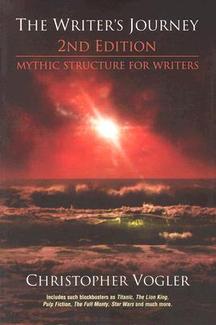
Write up to 500 words around the theme and send them to waxings.blog@gmail.com by midnight, 23 August 2011 (AWST, GMT+8) for a chance to win The Writer’s Journey: Mythic Structure for Writers by Christopher Vogler.

***

Latest Waxings

We have two new short fiction works: Citizen Pain, by Mark Cunningham, and Being Audrey Hepburn, by our most recent guest judge of the 500-word challenge, Robyne Young. Challenge winner, Robin Rhyner has also submitted the poem, Whoever You’ll Be.

All three would appreciate your constructive feedback. As always, I look forward to reading and posting your words.

***

Opportunities for Writers

 If you want more of these kinds of links, faster, follow @waxings on Twitter and/or ‘like’ Waxings on Facebook, where I share these bits and pieces as soon as I spot them. (*Bear in mind that I don’t know any more than you do about these offerings, I’m just passing on interesting-looking links.)

Posted in 500-word challenge, Blogwax | Tagged , , , , , , , , , , , , , , , , | 2 Comments

Trends in Publishing – Part 3: We’ve Never Had It So Good

Relax. The mega-conglomerates are taking over publishing and that is a good thing.

Emmett Stinson, author, poet, academic and president of SPUNC, Australia’s only advocacy group for small presses, says digital convergence in publishing is taking us to a brighter future. It’s good for writers, it’s good for small publishers and it has never, ever, been better for readers.

“I would argue that now is the best time in the history of the world to be a reader,” Stinson told the EWF’s ‘Trends in Publishing’ session. “You can get any book you want, you can get it easily, you can get it in multiple formats. If it’s an e-book, you can get it immediately.

“It’s easier in other ways too. You don’t have to go anywhere, you don’t have to go to a bookstore, you don’t have to interact with another human being at that book store if you don’t want. This is the thing we’ve got to remember. These changes are occurring because they are better. They are fundamentally better.”

Stinson said massive companies such as Apple, Google and Amazon would become the most important companies in publishing, dwarfing traditional publishing houses. But this would create more opportunities for smaller players.

“This is the trend we are seeing, the paradoxical truth,” he said. “We are seeing this massive conglomeration at the top but also this democratisation and productive anarchy at the bottom and, at the end of the day, readers will be benefiting from all of it.”

Stinson described what was happening below the sightline of the big players as ‘productive anarchy’.

“That’s because not only individual authors but small publishers as well suddenly have access to this entire network of global distribution that, previously, only very large companies had access to with material books,” he said.

“And what this means is that all these smaller players at the bottom of the chain are going to be able to do really interesting things. They are going to find new business models and new ways to make money on margins.

“This is actually a good thing for authors in the grand scheme of things as well. Especially if you are in an area that might previously have been more of a niche. There will be more opportunities for you to actually find an audience, to connect with the audience and also, more economically, to make some money from that audience as well. So this is, I think, quite an exciting possibility.”

Stinson’s view echoes the optimism of the ‘Death of Print’ panel at the Perth Writers Festival earlier this year, in which James Bradley compared the current ructions in publishing to developments in the music industry 10 to 15 years ago.

Bradley said the democratisation of the means of making and distributing music unleashed an exciting new wave of originality and creativity in that industry and this was beginning to happen in publishing.

Exciting. That was the common word. And it is. If you don’t work in traditional publishing.

Posted in Blogwax, Emerging Writers Festival 2011, The Buzz | Tagged , , , , , , , , , , , , , , | 2 Comments

Trends in Publishing – Part 2: Trends v Heart

Vampires, vampires and… more vampires. That’s a trend. Surprised?

Catherine McCredie, a senior editor in the Books for Children and Young Adults department at Penguin Books, says she has lost track of the number of vampire books on the publisher’s front list from the last 12 months alone.

“And we’ll keep publishing those books as long as we keep getting the material and as long as there are the readers for it. At the moment, the trend is definitely there,” McCredie told the EWF Town Hall Writers’ Conference ‘Trends in Publishing’ session.

Okay, so the vampire trend is not so surprising.

To be honest, I just led with that because a writing pal has written the start of a compelling vampire novel with a few startling twists (and not a sparkly vamp or lovesick teen in sight) and won’t bloody finish it. This is distressing to me because it is exactly the kind of book I would stay up all night to read. (You hear that Cunningham? Give us more ‘Isabella‘!)

Back to McCredie and the ‘Trends in Publishing’ session, in which she identified current trends – vampire/paranormal, dystopia, steampunk – then addressed the question: “Is it better to surf the trends or follow your heart?”. The answer, it seems, is ‘yes’.

“I wouldn’t say one is better than the other,” McCredie said. “A publisher like Penguin has both sorts of books on its list.

“I think what that question’s really about is, how does your voice get read among the cacophony of other voices clamouring to be heard? And I think that writers need three attributes. They need a distinct voice, relevant themes and mastery of the craft.

“I was reading Outliers by Malcolm Gladwell and he mentioned that it requires 10,000 hours to master any art or craft. So, if you’ve made a decision to be a writer, that is a big commitment – 10,000 hours where you could be doing anything else.

“Without that you are unlikely to have mastered the craft and I think everyone in this room acknowledges what a vast amount there is to learn about writing.”

McCredie pointed to Shaun Tan (The Lost Thing) and Sonya Hartnett (The Boy and the Toy) as “brilliant exemplars” of writers who followed their hearts and still managed to surf the trends to success.

“(They) are both idiosyncratic, both follow their hearts, both have had great success,” she said. “Both actually fairly recent recipients of the Astrid Lindgren award, which is the richest award for children’s writing, worth I think about $880,000 Australian. Shaun Tan was awarded that this year and Sonya Hartnett was the first Australian writer to win that award.

“One of the fantastic things about being a writer is that you can do what you want to do. You can surf a trend and then you can follow your heart. You can do a bit of both. You can do anything in between. You can be inconsistent in your career.

“Publishers love writers who are consistent in their career but you don’t have to follow that if you don’t want to.”

Another example of success without following trends was Paul Jennings. His 10-year-old son hated reading and Jennings saw a gap in the market, an opportunity for easy-to-read yet compelling stories that could hook his son and other children like him.

“And Paul Jennings is Australia’s top-selling author,” McCredie said. “I think a great area for any writer to consider is where are the opportunities and the gaps in the market.”

One of those gaps was the digital sphere. “It’s exciting and new and I think anyone with a bookish concept that sits within the digital space – and I have no idea what I mean when I say that – will find that publishers and government grants-funding bodies are interested in a strong concept.

“There are real opportunities out there. No-one’s necessarily expecting that area to make money straight off but they are willing to put money into it to watch it develop and grow.”

> More from the Emerging Writers’ Festival 2011 Town Hall Writers’ Conference

Posted in Blogwax, Emerging Writers Festival 2011, The Buzz | Tagged , , , , , , , , , , , , , , , , , , , , , , | 1 Comment

Trends in Publishing – Part 1: A Short, Sharp Future?

Here’s an interesting publishing trend – shorter books. Maybe.

Editor David Winter says Text Publishing is doing a lot of short books at the moment. It’s not a deliberate strategy, he hastens to add. But his musing about the opportunities this might provide for new fiction writers is a rare glint of optimism in the otherwise gloomy debate surrounding the future of traditional publishing.

Winter did preface his remarks in the ‘Trends in Publishing’ session of the Town Hall Writers’ Conference with a less than chirpy overview of recent developments in the book industry. He described it as “the equivalent for Australian publishing of the global financial crisis”. But he sounded upbeat about what was to come.

“All this massive change probably sounds fairly negative or at least potentially scary,” Winter said. “But I do think there are some pretty good opportunities for writers.

“There are more books than ever, more published writers than ever before, and I think we’re looking at something that’s just going to be out in the broader marketplace, a more differentiated marketplace. We are seeing it already.”

Which brings us to shorter books.

“This is not a deliberate strategy but it is true that print books are cheaper when they are shorter and also that many of our manuscripts that are submitted are just too long,” Winter said.

“A big name writer, a Tim Winton book, will go out in trade paperback in the largest format or in hardback but many of the newer writers will come out in smaller-sized editions at cheaper prices and I actually think that’s a really promising thing, particularly for literary fiction. And I hope that can actually continue to bolster that area.”

Winter said 80,000 words was a prime area for standard literary novels. But he was interested in novellas as a way of expanding the market, providing opportunities for new writers and attracting more readers overall.

“I’m curious about whether that area can be expanded by a lower price point, a smaller format,” he said. “I think that we need more readers out there. It’s hard for people, particularly if we are not talking about genre books, to find time to read…and a really crisp 35,000, 40,000-word book can be immensely satisfying.

“I’ve always thought that novellas are treated with some disdain in literary circles and I don’t really understand why, frankly, because some of the greatest books are novellas.”

My take on this was that new writers should not get hung up trying to make a ‘standard’ word count. If you think the story is done at 35,000 words, maybe that’s all it needs. Don’t ruin it with padding.

Maybe the lower costs involved for publishers will mean more opportunities for new writers with shorter manuscripts. And maybe more short, sharp and well-written books in the marketplace will help to generate a new or returning readership. If so, this can only be good news for writers and the book industry generally.

Winter also suggested there might be increasing opportunities in the digital arena for short stories to be sold separately and for small magazines and journals to bundle editions or essays to reach more readers. Other trends/opportunities he identified:

  • “A really big open space” for non-fiction, such as quality essays turned into books;
  • Creative memoirs such as Edmund de Waal’s Hare With The Amber Eyes;
  • Julian Assange overkill – “Please don’t write any books about Julian Assange”;
  • Histories back to macro-level, big topics like World War II, Jerusalem, the Roman Empire – “The micro-history trend has, I think, really done its dash.”;
  • Pop science “is massive”. “If there are any neuro-scientists out there who want to write a book, you could make a whole lot of money, particularly if there’s a business or self-help slant to it.” ie. Jon Ronson’s The Psychopath Test;
  • Books that are ambitious, that start a conversation. ie. The Slap and We Need to Talk About Kevin;
  • “In local fiction, historical works are always going to do well.” ie. Geraldine Brooks, Kate Grenville, Craig Silvey (Jasper Jones);
  • Genre – “We do seem to be between blockbusters. We’re past Twilight, we’re past Harry Potter, past Stieg Larsson and we’re waiting to see what happens.”; and
  • Something odd (my words) – “Information that we gleaned from overseas book fairs was that overseas publishers were not wanting rights in Australian books that were not happy. Apparently, overseas, they want love stories and feel-good things and they really like it to wrap up nicely at the end.”

All of that said, Winter made a good point about trends being hard to spot and more likely to be ‘a large coincidence’ given long lead times in publishing. His advice to writers: “Write what you want and make sure the voice is true and authentic.”

David Winter was not the only panellist in the ‘Trends in Publishing’ session but I was intrigued by the notion of a short book trend so will address the rest of that excellent session in the next post. (Yes, I am aware of the irony)

> more from the Emerging Writers’ Festival 2011 Town Hall Writers’ Conference.


Posted in Blogwax, Emerging Writers Festival 2011, The Buzz | Tagged , , , , , , , , , , , , , | 4 Comments

Winner, ‘Water’ Challenge, and more…

Congratulations to J Gavin Allan, winner of the ‘water’ challenge with her delicate reflection on lost innocence, Observations of Nước Hoa.

Jaye wins a copy of Zen in the Art of Writing by Ray Bradbury.

Thanks to all who took the time to enter this round – there were some crackers in the mix. And warm thanks to our guest judge this month, Tamara Hunter, a veteran journalist, deft hand at fictional quirk and regular contributor to Waxings.

Tamara was given only the titles and text of each entry, without author names, and agreed not to read the posted versions so was not aware of ‘likes’ or comments.

Here are her comments on the round:

The theme of ‘water’ was a fantastic one, eliciting a broad range of approaches and emotions. The resulting entries, a number of them clever, fascinating takes on the theme, reflect the different responses water can evoke in us – its positive cleansing or healing qualities and its role as a giver of life, its musical quality, its ability to instil fear, to mask discomfort or danger, to distort reality, or to consume and wash away that which we cannot face – indeed, our very selves. There is a great deal of wisdom and power associated with water, and the winning entry reflected these elements. A piece of gentle, wistful reminiscence, it still packed a punch as a tale of innocence lived and lost. The writer managed to capture both the soft, sensual, cleansing side of water – its purity lent to the blithe and innocent souls who bathed in it daily – and the danger lurking beneath the surface. There was a simplicity and a smoothness to the writing, a feeling at the end of having peeked into a beautiful scene, and sadness at what had been lost. Congratulations to the winner, and kudos to all who entered – the high quality of entries made this a difficult decision.

***

The Next Challenge

The next round of the 500-word challenge is now open and the new theme is ‘earth’.

Write up to 500 words around the theme and send them to waxings.blog@gmail.com by midnight, 4 July 2011 (AWST, GMT+8) for a chance to win Self-Editing for Fiction Writers : How to Edit Yourself Into Print by Renni Browne and Dave King.

This month’s prize selection was inspired by recent discussion about editing – both in the general news, as a result of some Australian newspapers outsourcing their sub-editing functions, and on my Twitter feed, where writerly types have been reflecting on the importance of self-editing.

In both circumstances, skilled editing is vital to producing a good quality outcome. And, in both, there seems to be declining appreciation of that fact.

As a former newspaper journalist, I know the value of good sub-editors. They ensure clarity, accuracy, consistency and, importantly, help to avoid undue legal attention. They are responsible for design, layout and, of course, those attention-grabbing headlines.

I’ve been known to curse long and loud after my writing has been massacred by an unthinking or uncaring sub. (Drama queen anyone?)

But those times are far out-numbered by the occasions on which a diligent sub has averted calamity by spotting a problem or has simply made my copy read more clearly. That last skill is priceless in both non-fiction and fiction.

Text Publishing editor Mandy Brett addressed the importance of editors in both fields in a recent speech at Melbourne’s Wheeler Centre. Here’s an edited extract on the Bookseller+Publisher blog, Fancy Goods. It’s an interesting read.

***

Opportunities For Writers

If you want more of these kinds of links, faster, follow @waxings on Twitter and/or ‘like’ Waxings on Facebook, where I share these bits and pieces as soon as I spot them. *Bear in mind that I don’t know any more than you do about these offerings, I’m just passing on interesting-looking links.

***

Latest Waxing

Welcome to our newest contributor, Serena Wyle, who just missed the deadline for the ‘water’ challenge with Saltwater so it has been posted in the ‘Short Fiction’ category. Serena would appreciate your constructive feedback.

As always, I look forward to reading and posting your words.

Posted in 500-word challenge, Blogwax | 1 Comment

7 Things I Wish Someone Had Told Me

“Talking about writing is not writing, tweeting about writing is not writing, reading about writing is not writing, going to writing conferences is not writing, blogging about your work in progress is not writing… if you want to be a writer, at some point you’ve got to sit down and do some writing. I’m sorry, that’s just the way it is.” – Chris Morphew

Wow, total face-slapping reality, first thing on a Saturday morning.

Another interesting tip from Scottish writer, Alan Bissett: a good writer has to be “the guy in the toilet, dealing drugs.” More on that later.

The Emerging Writers’ Festival Town Hall Writers’ Conference this weekend was two full days of similarly real and  thought-provoking insight, discussion and face-to-face connection with ‘established’ and ‘emerging’ writers. (Quotes because there was some debate about the relevance of the descriptors.)

I’ll post as much of it as I can, as soon as I can. But I have the words “blogging about writing is not writing” ringing in my ears so just this for today.

In Saturday’s opening session, ‘Seven Enviable Lines’,  conference ambassadors Carmel Bird, Alan Bissett, Keri Glastonbury, Tony Moore and Chris Morphew shared seven secrets they wished they had been told at the start of their careers.

Their insights were a mix of the fresh and familiar for those on constant look-out for writing guidance. But all, I think, are useful to contemplate. Here’s a summary (it looks long but is a fast read – promise):

Carmel Bird – published her first collection of short stories in 1983 and has since published many novels, essays, anthologies and books on how to write. 

1)      Write every day.

“Set yourself a realistic goal, such as writing one page every day. One page a day. Of course, if you write more than the page, that’s fine. So long as you do the one page…If you are working on such things you need to pay attention to them every day and that is, you need to write them, every day. And that includes Christmas Day, your birthday and today.”

2)      Read a lot.

“Reading nourishes writing. I mean long, concentrated reading. Thoughtful reading. Critical reading…If you’re writing a novel, for instance, you are working in a form that has developed over centuries and I think there is a point to your reading some of what has gone before, putting yourself into context. You may be going to break out and reinvent the form. But you would find it useful to know what you are reinventing.”

3)      Listen to your own heart. Your own imagination. Your own editor, learn to be your own editor and develop a sense of humour.

4)      Mostly do not listen to your lover, your friend, your mum, if they discuss your work.

“Take even the comments of fellow student writers with a grain of salt. They possibly don’t know what they are talking about. There’s quite a lot to be learnt about knowing what is the pure comment and what is somehow confused by other elements of your relationship to the other person who is making the comment. That’s sometimes really tricky to sort out.”

5)      Learn to deal with rejection of your manuscript.

“You might hear people say ‘oh it’s your story or poem being rejected, not you’. Well they’re wrong. Your poem’s being rejected, your story is being rejected and you are being rejected.”

6)      Stay focused and optimistic.

“Pay attention to the world, not so much in a second hand way through other writing, but at first hand. Smell the flowers. Notice what you are interested in and develop your interests. Find the drama and the conflict that are the lifeblood of stories.”

7)      Pray.

Keri Glastonbury – is a poet and lecturer in creative writing at the University of Newcastle.

1)      Poetry can be a cash cow.

“I definitely didn’t believe poetry would be a career choice and I’ve always had day jobs. But despite itself, it’s always been poetry that has saved the day for me financially. I got my first grant when I was 27 and it was a $5000 emerging writers scholarship. Since then I’ve had the Australia Council Rome studio (and other grants)…”

2)      Don’t do it for the money.

“Even though I’ve benefited from some government grants, I see it more as part of a gift economy, that I put in as much as I take out. I have few fiscal expectations and it’s also why I find it hard to join the ASA (Australian Society of Authors) sometimes because I’m also interested in how writing is being de-professionalised and I’m interested in that in this context as well.”

3)      We are all emerging writers.

This is actually quite literal because I went to apply for an Australia Council grant this year and I’m in the emerging writers category again because my poetry books are so small they didn’t make the page limit test.”

4)      Don’t worry if you never emerge.

“While, for some of you, being emerging is no doubt seen as an initial stage on the spectrum towards being established – I guess that means book contracts, agents, publishing -it’s more likely that mainstream literary publishing won’t be the shore on which you do eventually emerge or, more likely, beach.”

5)      Consider ‘emerging writers’ as a kind of peer-to-peer network or wiki rather than a place on the continuum to ‘developed’ and ‘established’.

“We seem to be producing more and more writers and that is almost creating a kind of cultural anxiety…but perhaps these old categories of national authorship have now proliferated beyond the Australia Council’s attempts to have ‘emerging’, ‘developing’ and ‘established’ writers on this kind of individual model…I’m interested in how community and coterie interact in the literary world rather than that individual model.”

6)      Write for yourself.

7)      Go to university.

“While I don’t think you need to do a degree to be a writer…I just want to put a plug in for universities being a space where you can reflect on some of the critical ideas around your practice in a kind of communal way and you can do practice-led research at university to realise your research artfully”.

Chris Morphew – wrote the Zac Power and The Phoenix Files series.

1)      Just write.

“The hidden danger is that we can spend all of this time doing these peripheral things and feel like we’ve made some real progress on our novel or our whatever it is when, really, we haven’t. So here’s the thing, if you want to be a writer, at some point you’ve got to sit down and do some writing. I’m sorry, that’s just the way it is.”

2)      Don’t stress about what the market wants.

“We talk about the market as though it’s some kind of capricious deity that we have to sort of sacrifice goats to and dance naked in front of in order to get it to do our will…Keep an eye on the market, understand the market, figure out how the story you want to write fits into the market but please, please, please don’t let the market tell you what to write. ..What the market wants is great stories. The market wants great writing. So just make some of that and you’ll be fine.”

3)      Be honest. Be yourself.

“There is nothing new under the sun, except you. You are an original creation and that gives you the capacity to create original creations so just don’t try to be someone else. Be you. Write about your life, your world view, your personality, your experiences and, in the process, become more original than you ever would have just by working really, really hard and trying to sum it up self-consciously, originally.”

4)      Know where you’re going.

“I need to have some idea of where I’m going before I start or I’ll just end up wandering in the wilderness. So if you’re the kind of person who regularly finds themselves getting stuck, I would suggest coming up with kind of plan. Some sort of outline of where you’re going might be a helpful exercise.”

5)      Find a small number of honest critics

“I have half a dozen people that I’ll give the manuscript to when I’ve finished: a couple of fellow writers, a couple of people who fit more or less into the demographic of what I’m working on, a close friend or two and my editors. These people have three things in common – they are insightful, they don’t just say ‘yeah, that’s pretty good’. They are honest. They don’t say ‘that’s pretty good’ when clearly it wasn’t. And they want to see this story become the best thing it can be.”

6)      Find the third way.

“You are bound to have some things in your work in progress that you feel really, really passionately needs to be there and others feel just as passionately you need to get rid of it. When I find myself in this situation, which I quite often do, I know the best option is not just to cave in and do whatever my editors want but also not to be a diva and demand that I have everything my own way…I look for the story-telling fix that is neither their initial solution or my initial solution but a third solution that we can all be happy with because, inevitably, that third way is going to be better both for the manuscript but also for your relationship with your editor or your friend or whoever is giving you this feedback.”

7)      Don’t let writing define you

“We live in a culture that wants to define us by what we produce, by what we output, by our material success but it’s an easy trap to fall into, essentially in an industry like this one that is essentially pouring ourselves out for other people to interpret and react to and criticise…Write, create, tell stories, send your ideas into the world but remember that you are not what you write, you are more than that, regardless of your circumstances. If you are writing then you are already a writer, now, today. But that’s not all you are.”

Tony Moore – former documentary-maker, book publisher, writer and now academic at Monash University.

1)      Read, read, read.

“Know what others have written. Be educated. Understand the literary greats and the not-so-greats so you can expand on what’s gone before and have a literacy in our cultural traditions…To be innovative, to break new ground, it helps to know the ground that’s gone before.”

2)      Don’t just write about yourself and your mates.

“Cross borders, show empathy. There’s a romantic notion… about the flaneur which is a bit like the voyeur in one sense. The early writers in the 19th century who strolled out, walked around the modern city, absorbing the sights, sensations, characters, then writing about it in serialised fiction and non-fiction. Balzac, Baudelaire for example. I think that’s what good writers do, you go out and you suck up life, find interesting stories, people that you don’t know about.”

3)      Practice the craft of writing and various styles in order to find your own style and voice.

“You only get good at it by doing it.”

 4)      Know your readers.

“Know the readership, know their expectations and try to stretch them a little, play with that.”

 5)      For non-fiction, hone your research and interview skills.

“You can get these skills not just from journalism but university work, policy work, I did a lot of survey work when I was young, that helps.”

6)      Develop a public persona that will help you promote the work with editors, publishers, festival organisations, the media, especially the readers.

“I’ve looked at those authors that have done certain little tricks or played a game that creates their persona. These things are important and there are many elements to them. One is learning and knowing how to pitch professionally and that includes writing a proposal to a publisher…Learn to cut through in the media about your work, to talk about it. Learn to cut it in the festival circuit or talking in school. All of those opportunities to talk are really useful…For young and emerging authors, being part of a movement or milieu, whether its angry young men, dirty realist, grunge lit, chick lit, can help you position yourself both with publishers and the readership… In terms of your persona, don’t be afraid to take risks and don’t shy away from controversy. As a publisher, someone who has published a children’s book by Chopper Reed for example, that kind of controversy helps move a book.”

7)      Try to earn a living that enables your writing.

“My tactic has always been to try to find a job that involves me in writing and can embellish my research, whether it’s journalism, being a Phd or Masters by research student, getting a scholarship and writing a thesis, being an academic or teacher, being a project consultant and writing briefs for a project or working in the media as a researcher or producer – all of these things enable you to practice your writing.”

Alan Bissett – award-winning novelist, playwright and performer from Scotland. His books include Boyracers, The Incredible Adam Spark and Death of a Ladies’ Man.

I can’t possibly do justice to Bissett’s description of an accidental encounter with a drug dealer in a nightclub toilet a few years ago. Just know that most of the following advice was linked back to  aspects of this character, that it was truly funny and that you should go see/listen to Alan Bissett if you ever get the chance.

1)      Learn how to perform.

“At some point, when your book’s published, you’re going to be forced in front of an audience and you need to make a decent transaction in order to be involved…or you’re not going to sell any books, they’re certainly not going to come and see you again and it’s unavoidable, that’s part of being a writer now. Staying home and writing the book obviously is a huge part of it but at some point  you’ll be wheeled out so learn to enjoy it, rehearse the shit out of it, and that’s definitely, definitely one of the ways in which your career can advance immeasurably.”

2)      Style.

“I think the writers that stay with us are ones that have their own style that is almost uniquely theirs so that when you read other writers you compare it with them because of the way they write. If you expect people to connect with your work, they need to read sentences that nobody else can write, that they’ve never read before, that they didn’t write.”

3)      Write what wants to be written.

“I think there’s something about writing that should feel like truancy, that’s actually kind of like skiving off school, otherwise, why would you do it?… There’s a wee secret thing in there that you really want to be doing and, for you, that’s writing. So you scurry away and you tap it out and it feels kind of furtive and when it stops being like that, then probably the life has gone right out of it. So write the thing that wants to be written and that’s usually, there’ll be a heat coming off it that you can’t fail to recognise, so go where the heat is and it’s often the source of pain. You know. There’s all sorts of stuff that’s happened to us in our lives that we don’t really want to talk to people about and that will come out…because it’s ferocious.”

4)      Editing.

“The real writing is in the editing I think. And I realised a while ago that it’s not that I enjoy writing, I enjoy having written. It’s like going to the gym. It’s painful and it’s sore and you’re like ‘why am I doing this?’ and then, a couple of days later, you kind of feel better for it…once it’s there on the page and you go back to it and stare at those sentences and polish them up, that’s where the real fun is actually, shaping it and making it into something…take a long time over that.”

5)      Politics are unavoidable so stand for something.

“All of us have nation and culture and a political point of view that will inevitably come out somehow in the writing because, if you’re writing about people, then you’re writing about politics. And you can turn the politics up or you can turn it down, but it’s there. And be aware of it and don’t be afraid of it because it’s the thing that will give you truth and integrity.”

6)      Go funny, and then go dark.

“Make the reader laugh and then punch them. Punch them and then give them a cuddle and tell them it’s going to be alright so they trust you again. And then kick them in the shins…Keep the reader there and they don’t know what you’re going to do next…The darker it is, the funnier it has to be…I don’t know if anybody’s read American Psycho here but it doesn’t get any darker than that. It’s disgusting, but hilarious.”

Bissett ran out of time for a seventh point but did speak on other conference panels. Stand by for more from the Town Hall Writers’ Conference.


Posted in Blogwax, Emerging Writers Festival 2011, The Buzz | Tagged , , , , , , , , , , , , | 7 Comments