It’s A Dog’s Life: Andrew O’Hagan

Guest post by Keith McDonald

Novelists are constantly striving for original takes on old themes and Scot Andrew O’Hagan came up with something markedly different in his latest novel. He even gave up his usual serious style of writing in order to achieve originality through comedy. 

By his own admission at the Perth Writers Festival, all his previous books had been “sombre” but when he told his publisher that his next one would be about the final years of Marilyn Monroe as seen through her dog’s eyes, they looked aghast and one said: “Well, that’s not for the Booker then.”

O’Hagan explained that a decade earlier he was present when six Polaroids of Monroe’s dog Maf sold for a staggering $US220,000 at an auction in New York.

He was shocked that such seemingly trivial artefacts would fetch such a high price. Alone in his hotel room afterwards, he poured himself a large whisky and “heard the voice of the dog speaking incredibly sensibly about the 20th century”.

Much research later, The Life and Opinions of Maf the Dog and of his friend Marilyn Monroe was the result. Frank Sinatra gave Maf, a Scottish Maltese poodle, to Monroe in 1960 and the actress died in 1962.

All of which begs the obvious question, why choose to observe Monroe’s final years through the eyes of a dog? Why not a human?

O’Hagan said that Monroe was the most written-about woman in history with almost 800 books about her. But she had been oversexualised. “The complication of sexual need wouldn’t be involved with a dog,” he explained.

Learning to see the world from a dog’s perspective, however, did present challenges for O’Hagan who said that he adopted a “Method” approach to the writing and became doglike.

One time he visited Monroe’s old stamping ground of Bel Air, Los Angeles and he recalled getting out of his car, not realising that people generally didn’t walk in such affluent neighbourhoods unless they were up to no good.

“I was crouching down trying to see buildings from a dog’s point of view when I felt a hand on my shoulder,” he said. It belonged to a police officer. “I tried to explain I was a Scottish writer trying to write a book about Marilyn Monroe’s dog . . . I have never seen two men reach for their cuffs so cautiously.”

Clearly, judging by the many laughs O’Hagan generated in his hour-long session, he has a strong sense of humour even though there hasn’t been much evidence of it in previous books. Explaining why he chose this time to opt for humour, he said that writing the same book in the same style 20 times for 60 years was a depressing thought.

“Writers worth their salt have the potential of variety in them,” he said.

Despite it being a very funny book, however, he reminded the audience that it was still about a young woman who was dying. “Sadness and happiness happen together, sometimes on the same day,” he said.

He nominated Shakespeare as an example of a great writer who was capable of both comedy and tragedy and Oscar Wilde was “a man who could see the tragedy of life and laugh at it”.

Perhaps drawing on Wilde’s example, when asked who Maf would be if he were a human, O’Hagan replied: “A cross between Billy Connolly and Noel Coward”.

Not only was Maf an inspired choice of central character for the book but so too was the focus on Monroe. As the number of books about her attests, she resonates strongly with the modern world’s obsessive celebrity culture.

Such obsession worries O’Hagan, who recounted once asking a class of school students what they wanted to be when they grew up. Sixty-five per cent of the girls in the class wrote that they wanted “to be famous”.

“They couldn’t imagine being real without being famous,” he said. “You used to be famous for something but the condition of just being famous is much newer.

“The Oprah-isation of culture has resulted in a lust for fame for fame’s sake. Australian Idol is today’s equivalent of gladiatorial combat…The audience gives the thumbs up or thumbs down…There is gladiatorial enjoyment in the destruction of these people.”

O’Hagan insisted that his book was factually accurate and he could “make every page of the book stand up in court”. Though he added: “I might have trouble convincing a court that the dog was a reliable witness.”   
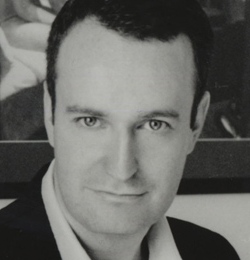
 

London-based author Andrew O’Hagan was born in Glasgow. His first novel, ‘Our Fathers’, was shortlisted for the 1999 Man Booker Prize, and his second, ‘Personality’, won the 2003 James Tait Black Memorial Prize. That year Granta named him one of the Best Young British Novelists. Andrew was a keynote speaker at the Perth Writers Festival.
More from the 2011 Perth Writers Festival >
Posted in 2011 Perth Writers Festival, Blogwax, The Buzz | Tagged , , , , , , , , | Leave a comment

Crime Fiction As Therapy

You spend your working hours dealing with violent psychopaths and their deeply traumatised victims. What do you do with your time off?

Immerse yourself in all things happy and positive? Hide under the bed covers? Do anything you can to forget, at least for a while, the dark, horrifying side of human nature?

In her ‘free’ time, clinical psychologist and author Leah Giarratano likes to create fictional psychopaths and write about what they do to their victims. Her terrifying crime thrillers are populated by characters she describes as “Hannibal Lecter’s peers”, more disturbing for having been drawn from her real life dealings with psychopaths and other heinous criminals while working in jails.

“I actually wanted to be a fantasy writer,” she said during a crime-writing session at the Perth Writers Festival this weekend. “But my job as a clinical psychologist pretty much made me have to download or dump all of the terrible things I’ve seen in the past 17 years working, primarily, as a trauma psychologist.

“I have seen just about every hideous thing that one human being can do to another. Writing, for me, is a catharsis and it has been a way of my processing what I do.”

Fascinated by the workings of human nature, Leah studied the impact of severe trauma on children and the adults they became.

“Some children who have been through such horrible childhoods grow up and they are able to flourish and thrive,” she said. “Some children will turn that hate inwards on themselves and develop drug and alcohol disorders, anxiety disorders, and they will go through a series of destructive relationships.

“There is a very small group who absorb the hate that is done to them and they direct it outwards so they become anti-social. And a very small group of those become what we know as psychopaths. So the study of trauma led me to be interested in psychopaths and I always wanted to meet a psychopath – until I did.”

As part of her doctorate studies, Leah worked in a secure unit of a New South Wales jail, where she met her first psychopath, among other heinous people.

“It was a jail within a jail and it was for people who were highly suicidal, acutely suicidal, they would self-mutilate, or they were there because they were so horrible that they would be murdered in the main jail because of what they had done,” she said.

“When I came out of that jail experience…I literally vomited out a scene which is the first scene of my first novel Vodka Doesn’t Freeze. I had to download this information.”

Leah has recently published her fourth book, continuing to ‘download’ the horrible acts and personalities she encounters in real life.

“All the characters in my books are based upon people that I’ve seen in my day job but I’ve plaited them together so that they’ll never recognise themselves in the books,” she said.

Despite her expert understanding of the evils people are capable of, Leah doesn’t want readers to hear the psychologist in her novels.

“I want them to read a kick-arse book they can’t put down,” she said. “I try not to educate or get on a soap box or let themes important to me out in the book. I really just try to write great crime and great characters.”

But she acknowledges the writing is a form of self-treatment, an application of the ‘exposure therapy’ Leah uses with her clients, where a traumatic event is examined and discussed closely, repeatedly, until the client starts to ‘digest’ the information into their own narrative and to heal.

“For me, writing is a bit like that,” she said. “So these four novels that I have written have been a way of me really trying to process, understand, make sense of, come to terms with some of the patients that I’ve seen.”

And she has just signed a publishing deal for her first fantasy novel – so the therapy worked.


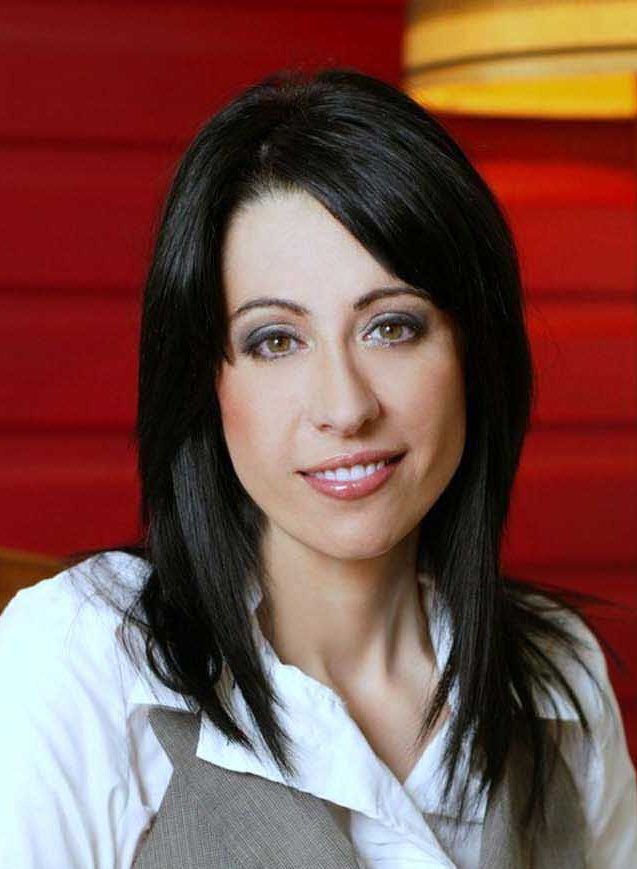
Leah Giarratano is a clinical psychologist who has worked in psychiatric hospitals, with the defence force and in the corrections system. In 2009, she delved into the psyches of some of Australia’s more fearsome criminals on the Channel 7 program ‘Beyond the Darklands’. Leah participated in a panel session on criminal writing and conducted a workshop on creating nasty villains as part of the  Perth Writers Festival.

More from the 2011 Perth Writers Festival >


Posted in 2011 Perth Writers Festival, Blogwax, The Buzz | Tagged , , , , , , , , , , | 4 Comments

The Science of Truth

Guest post by Tamara Hunter

It might seem odd to invite a scientist to talk about truth and fiction. After all, fiction is seen as the preserve of made up stories and science, you assume, is all about the search for factual certainty.

Not so, says former Australian of the Year and renowned scientist Tim Flannery, who thinks it’s actually the other way around: scientists don’t believe that there is a truth, while the most important truths are to be found in fiction.

Dr Flannery, who has penned groundbreaking tomes on climate change and on man’s influence on his environment (including The Weather Makers and The Future Eaters), says that while there’s a certain amount of truth to be found in the kind of analysis scientists employ to understand the world, at best they can only speak in probabilities.

For example, reductionist scientists study ever smaller bits of the world until they understand it – a method which reveals a certain truth but can never explain the whole story. Meanwhile, holistic scientists build models in the hopes of understanding complex systems. The most complex models are those of the earth’s climate systems.

“We all realise these models will never tell us the truth – they don’t reveal the future or the truth or anything else,” he says. “All they do is give us a probabilistic assessment of how things might work out in the long term. Their principle virtue is really in the fact that we can take any variable in the system, change it and see how that alters the overall outcome.”

He says even though we know the outcomes will be wrong, they’re the best guide we have to how things will work out.

By contrast, fiction tackles some of humankind’s most significant issues –including love, family, equity and the meaning of life.

“To me the closest thing in the world of fiction to a computer model is a piece of drama,” says Dr Flannery.  “We need, in order to understand those very, very complex issues, a simplified model where we can control the individual inputs in that model – and that is exactly what you see on stage.

“You will see an attempt by the dramatist to simplify the system, to put some archetypes in, and then perhaps vary them, so we can see ourselves what the outcomes are of the multitudinous inputs that assail us every day in our lives.”

Novels, he says, follow a similar approach. He points to the work of Jane Austen as an example of fiction’s ability to examine truth.

“Jane Austen’s novels are some of the most precise attempts at modelling the outcomes of human social structures, love and wealth that have ever been attempted,” he says. “They are extraordinarily precise and measured down to the last shilling, the last gram, the last quotient of love or whatever you want to call that.  And in those novels that she generated not only do we find some of the most beautiful language in English, we find some of the most profound truths as well.”

Dr Flannery says while no one would mistake Austen’s view of life in an English village for absolute historical truth, it is possible to see within the models she produced a simulacrum of the world which reveals more about ourselves, our desires and our situations than any single historical truth ever can.

“For me, truth really is in fiction. It is in modelling the world in the way people have intuitively done ever since the first play was put on in some cave who knows where in the world tens of thousands of years ago, and ever since the first novel was written.

“So I celebrate that approach to understanding life. Science is not just about a reductionist approach – it’s about an embracing of life at a much more holistic level than that.

“So truth or fiction? Unlikely. It is much more likely to be truth in fiction.”

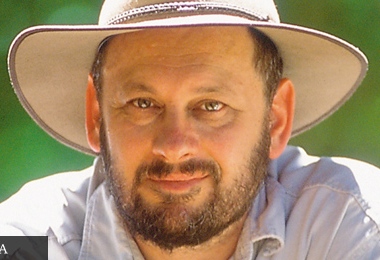
Dr Flannery, an often controversial writer, scientist and explorer, was a keynote speaker at the Perth Writers Festival opening event. The session examined the idea of Truth and Fiction. His latest book, ‘Here on Earth: An Argument for Hope’, has been described as a dazzling account of life on our planet and an extraordinary exploration of evolution and sustainability.

More from the 2011 Perth Writers Festival >

Posted in 2011 Perth Writers Festival, Blogwax, The Buzz | Tagged , , , , , , , , , , | Leave a comment

So You Want To Be Published – Part 2: A Publisher’s Tips

Getting your book published is harder than ever.

Traditional format publishing is under increasing pressure from the rise of e-publishing and falling book sales, among other factors. This means publishers are becoming more selective about the manuscripts they buy and writers have to work even harder to be noticed.

If you’re in any doubt, ask straight-talking publisher Melanie Ostell.

No, you can’t just tap out a few words after dinner, pop the results in an envelope and expect an ecstatic publisher to drop by the next day with a fat cheque and some ideas for cover art.

Yes, you do have to work your backside off – often for years – with multiple drafts and plenty of research, not only into your own story, but your genre, publishing houses and the book-buying market. Even then, the chances of your manuscript being picked up are not great.

“It is very hard to get a literary agent,” Melanie says. “It is very hard to get a book published. Most writers won’t. That is the bad news. The good news is they still need something to publish so there are still opportunities.”

If you are committed to getting published, Melanie stresses the need to follow protocols for submission to publishers and agents. If you don’t, your words won’t catch a second glance.

So what is it that publishers look for?

“It is not just one thing, it is everything,” Melanie says. “It’s character. It’s dialogue. It is the story and the way it is told. You are looking for life. There has got to be a compulsion to turn the page.

“It is very easy for people who read a lot of manuscripts to work out what the ambitions of the manuscript are. They don’t have to be successfully there but you have to see that they are more than a rough diamond, they are nearly making it to the trajectory.”

How do we get them to look in the first place?

These are Melanie’s tips:

1.       Finish your manuscript

If you really want to find a home for it, whether it be a publisher or agent, you need a finished manuscript. It generally won’t be the first draft. You would have to have three drafts before you think about sending it out somewhere. It’s that refining and honing that is terribly important.

2.       Make it the best you can

It is terribly important that what you send to a publisher or an agent in the hopes that you are taken up by one of them is the best you can make it. I don’t subscribe to the notion that a writer who is worth being published needs to go out and pay a lot of money out of their own pocket for someone to dot the i’s and cross the t’s when it is still a high-risk venture. If they are good they will have done sufficient to go to a publisher or agent. Having said that, there are manuscript appraisal services that might charge $500-$800 and provide recommendations, but that won’t be a copy edit.

3.       Do your homework

For the writer who feels they have got a cracking story, whether it is high-end literary or commercial or chick lit or science fiction/fantasy, it doesn’t really matter. What needs to be done here is for the aspiring writer to do their homework. They have got to seek out a publisher where they feel their book would fit their list. Know what companies publish, what sort of books and what sort of books they feel theirs could sit next to. Proofread letters properly. You would be amazed how frequently people will submit their manuscript with someone from a different company on the address.

4.       Consider approaching an agent first

It is not essential for an author to have representation but it can help. If the supposed author has sent it (a manuscript) to publishers and they are sent back rejection slips, that can ruin their chances with agents.

Agents are a filter for quality. That is why they are there in many ways. Not only to work for the benefit of the author but as a filtering agent for the publisher. So priority will always be given to an agent as opposed to something in the slush piles.

5.       Follow submission protocols

Target a publisher, or three publishers, or an agent or two. You are quite within your rights to do multiple submissions, providing the publishing house accepts unsolicited manuscripts.

You must follow the protocols. Publishing is notoriously demanding, with very long hours and very tight deadlines, and people are busy.

It is not necessary to send the entire manuscript, just a synopsis and three chapters. If they like it, they will come back for more. Supply return postage.

Never, ever email your submission to a publishing house, even if they accept unsolicited manuscripts. It is incredible rudeness to do that. Print out a hard copy and send that.

6.       Cooperate with the publisher

Changes will be suggested, make no mistake about that. It is just the degree. It might be a case that the publisher thinks it might be 85 per cent there. Sometimes I suggest perhaps a couple of characters need to be conflated. It is too busy. It is just far too long.

Just because you have finally got to that point doesn’t mean you have finished at all. Once it is in-house, it is a whole different ball game. It will be professionally edited. It might be structural editing, substantive moving around or suggestions to create an extra chapter or two or a different ending.

These sorts of conversations will be had before the publishing deal will be offered, to check on the author’s willingness to take on board the comments and to work with the publisher. There has to be a tacit agreement by the author, if there are significant concerns by the publisher for significant changes to be made, to list it to the next stage and the author has to be willing to do that work with them. By and large, most of them (authors) are so fascinated by what the next stage is that they are willing to do that.

The most common submission mistake of novice writers is not doing their homework. “Not doing their research and targeting,” Melanie says. “Not focusing, perhaps trying to find the person in-house that likes your particular style of writing. It is also laziness – unfinished manuscripts, manuscripts half-baked.”

In short, do it properly or not at all. The submission process is a lot of hard work and you still might not see your name on a book cover at the end of it. As Melanie stressed earlier, in So You Want To Be Published – Part 1, you really need to think about why you want to be published before embarking on this gruelling journey.

A clear understanding of your own motivation, as well as perspective on how the industry handles novice manuscripts, might help reduce the sometimes agonising gap between expectation and reality.

And it might help if, like me, you’re the type to buy lottery tickets.


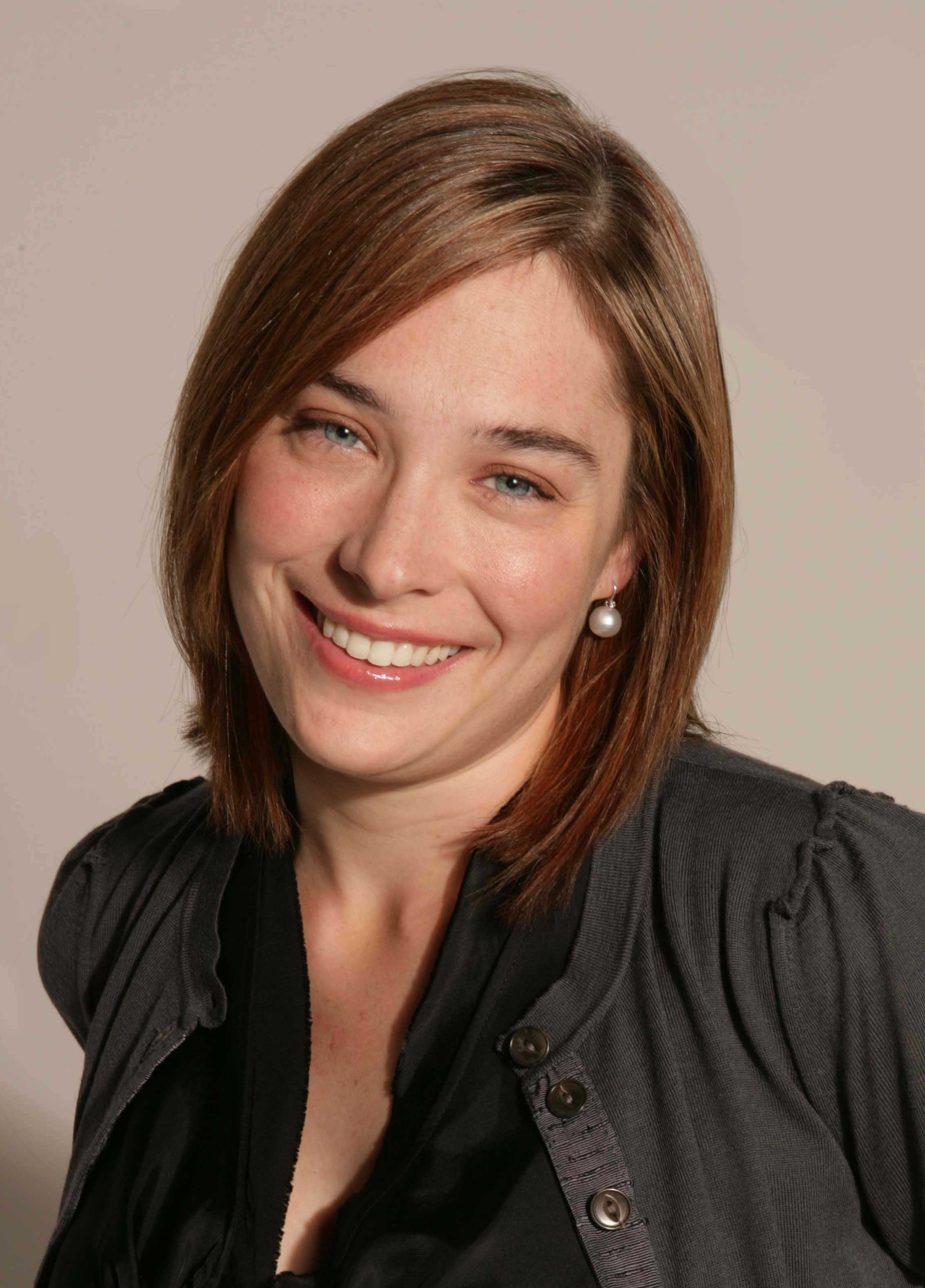
Melanie Ostell has just finished a 12-month stint as publisher at UWA Publishing and will return to freelancing, teaching and consulting in Melbourne. She was a senior editor at Text Publishing for more than 10 years and has worked with award-winning writers including Tim Flannery, J.M. Coetzee, Kate Grenville and Lloyd Jones. Melanie ran two publishing workshops, including manuscript assessment, at the Perth Writers Festival this weekend.

More from the 2011 Perth Writers Festival >
Posted in 2011 Perth Writers Festival, Blogwax, The Buzz | Tagged , , , , , , , , , , , , , , , , | 7 Comments

The Genius of Jane: Austen’s Enduring Appeal

Guest post by Tamara Hunter

Novelist and academic Sophie Gee remembers the first time she came across Jane Austen. It was her 12th birthday and her parents had given her a copy of Pride and Prejudice.

It had, they told her, this famous opening sentence which was a beautiful example of irony.

It is a truth universally acknowledged, that a single man in possession of a good fortune, must be in want of a wife.”

Gee devoured it, and although she didn’t understand either the irony or much else that very first time, she adored the story and the characters. Over the years she returned again and again not only to Pride and Prejudice but to Austen’s other novels. With each new reading, layer upon layer of meaning revealed itself.

“The truth is that as a 12-year-old I was baffled by the scene,” she says. “You know, it WAS a truth universally acknowledged that a single man being possessed of a good fortune must want a wife, and so that irony and wit and the different layers of meaning dawned on me very gradually over the next 20 years.

“But I think it speaks to what is so fundamentally appealing about Austen that a 12-year-old can really enjoy the book – which is that it is a good story, it’s beautifully paced, the characters are completely engaging, they’re totally appealing and they’re really complicated. They keep you interested.

“Those are the basic things about novels that we don’t really talk about any more, but they’re things that Austen just did superbly. She did a whole lot of other stuff as well but just at that basic level of narrative and pacing and character, she was fantastic.”

So fascinated was Gee that she went on to devote her working life to studying, teaching, and paying homage to Austen and other writers of the period. In 2007 she published her debut novel, The Scandal of the Season, a sophisticated, racy piece of historical fiction set in 18th Century London. The novel, based on the real-life seduction behind Alexander Pope’s famous poem The Rape of the Lock, has been praised for its Austen-esque wit and erudite observation of society of the day.

At The Perth Writers Festival this weekend, Gee will take fellow Janeites through Austen’s works to discover just how it is that the books of an 18th Century spinster manage to remain as fresh and relevant as when they were first written 200 years ago.

Gee says there’s much to explain the enduring appeal.

“The stories are very classically appealing I guess,” she says. “They tend to be girl meets boy, obstacles stand in their way but love triumphs – which is irresistible, really.

“But then I think what’s so special about Austen is the way that she plays with those traditional stories and ends up creating novels that have a lot of darkness in them. They have hints of loss and sadness, hints that the story could have gone wrong but it didn’t. You see other characters who haven’t had these fairytale outcomes and you see the sort of dark, bleaker side of that world as well as the happy side.”

She says Austen’s books are filled with themes which continue to resonate today but also give us insight into a world now gone forever – one filled with intricate rules, constraint and curious codes of manners.

“On the one hand the stories really speak to us,” she says. “They’re stories about people not having enough money, people not having particularly good health, having bad luck with their children, especially having bad luck with their parents – I think that’s a really important theme in Austen.

“All of that is enormously contemporary. And what’s interesting about it from the literary perspective is Austen is the first writer who makes those stories feel contemporary in that way.

“But on the other hand what you have is a world that we absolutely can’t get back. A world of the English aristocracy and servants, and men and women not being allowed to be in a room together alone until they’re engaged, kids living with their parents until they get married – all of those conventions which we completely can’t have back and which makes the other stuff very, well, sort of fun and far away from us.”

Gee says one of Austen’s attractions is the way she explores how people could have feelings and very full lives in a world of enormous constraint.

“From a novelist’s point of view it’s technically captivating because she gives herself these very extreme constraints imposed on her by the social world and she finds characters who manage to evade them.”

Although Austen cannot have known that she would continue to have such appeal two centuries on, Gee believes that – contrary to the view that used to exist of Austen – she was very aware of and enjoyed what she was doing.

“One of the things that has happened in the world of Jane Austen scholarship over the last 10 or 20 years is that people have dislodged this idea that Austen was this sort of unselfconscious genius who sprang out of nowhere and wrote these extraordinary books in isolation, not having really read anything or having been involved in the literary world. That was the old version of Austen.

 “It turns out that although she lived in a country town in England and she wasn’t ‘in’ the literary world like Byron or someone, she was extremely well read, she exchanged letters with other writers, and from her own private correspondence with her family and so on we can tell that she was really giving a great deal of thought to the sort of writer she wanted to be and the ways in which she wanted to be different from her contemporaries – in particular the ways in which she wanted to write a different kind of novel from the kinds of novels that had been written before and were being written at the same time.

“So it’s certainly the case that she more than just enjoyed it. I think she really realised this was going to be potentially something very exciting and new and really amazing. In other words, I think she realised just how revolutionary a writer she was. She didn’t live to see anything like her success – I think she would be, and any writer would be bowled over to discover they had turned into Jane Austen. But she definitely wasn’t a kind of naive amateur living in the country scribbling away. She thought of herself as a professional writer and she wanted to write a new kind of book that hadn’t been written before and what’s amazing is that she actually did.”


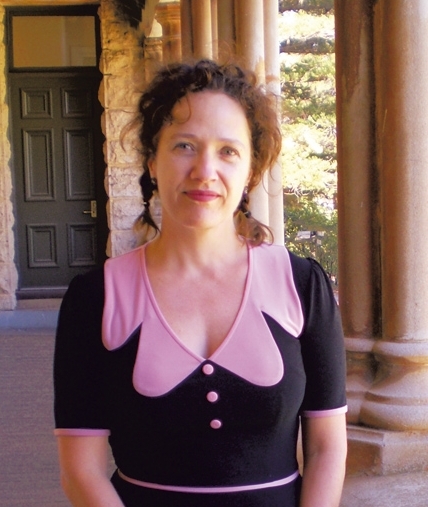
Sophie Gee graduated from the University of Sydney and won a scholarship to Harvard to do a PhD in English Literature. She is now a professor of literature at Princeton University in the US.  Sophie lives in Brooklyn with author-husband Lev Grossman. Apart from her Perth Writers Festival workshop on Jane Austen, Sophie will participate in discussions on the distinction between Popular and Literary fiction, what the masters can teach us about writing fiction, and in the Book Club Event – Desert Island Desires.

More from the 2011 Perth Writers Festival >
Posted in 2011 Perth Writers Festival, Blogwax, The Buzz | Tagged , , , , , , , , , , | 6 Comments

So You Want To Be Published – Part 1

So you want to be published. Why?

Think about it. Take plenty of time because, let’s face it, it’s not going to happen in a hurry…if at all. Unless you’ve got cash to burn and can pay to self-publish, the road to seeing your name embossed on a book cover is long, hard and, for most would-be authors, endless. 

It’s not impossible to get published. After all, there are books in stores right now. They were written by people who once wrote and dreamt of being read – just like you. But if you want to join them, make sure you know why – to be sure it’s worth the pain. Be prepared to work hard.  Do your research. And be realistic.

The reality is pretty brutal. To be honest, I was a little depressed after my recent interview with publisher Melanie Ostell. My fantasy of a wall of shelves filled with my own titles – tastefully designed covers in a satiny-smooth matt finish, multiple copies of each, translated into the several languages of my adoring readers – evaporated before her no-nonsense presentation of the facts. But she may have saved me a lot of unnecessary anguish.   

Melanie knows about books and writing. She has read thousands of manuscripts. She can easily identify a novice writer’s key literary influences. She can even, quite intimidatingly, chart the reading progress of that writer through different books as they produced their manuscript. When that happens, she knows they are not ready. They have not yet found their voice.

As we talk, Melanie worries she sounds hard. To me, she simply sounds honest, if a little frustrated that new writers don’t understand the publishing industry and what it takes to be published, at the deep disappointment such ignorance can bring.

This is what she tries to prevent when she talks to aspiring authors, such as those attending the publishing workshops she will run during the Perth Writers Festival this weekend.

Melanie’s advice has a strong theme running through it: most writers don’t get published and those who do work damned hard for it. As she says, writing is hard and unforgiving. Tinkering with words for an hour after watching ‘The Biggest Loser’ is not going to get you published.

“It requires much more commitment than that,” she says. “People fail to realise that. Getting your bum on the seat and putting the words down, one after the other, is hard slog.”

But do you really want to be published? And, if so, why?

“That will be my opening spiel in both of my workshops because the reality is that most people won’t be published. By far the majority won’t be,” Melanie says.  “I think people really need to know how much they want it or why do they want it? I don’t think people do that enough.”

At first, it seems an odd question. After all, why wouldn’t you want to be published?

Then I realise that Melanie is drawing the distinction between being happy if the publishing fairy sweeps down and converts your words to book form in your sleep and really wanting to be published – enough to work at it, to brave the likelihood of rejection.

“There are so many motivations for writing and for some it is not about being published,” Melanie says. “Sometimes I have discovered that writers are happy writing it and putting it into a drawer and that is enough, and others want readers for their words.

“I don’t think that many (published) writers find it that much fun. But it is what they do and they know it has to be done. I think that is an interesting thing. For people getting recognition with first novels, who knows how they are going to be with novel four or novel two?

“It is not always going to be pretty. But they have to ask that question because then, for all the rejection slips, all the sorrow, all the misery, all the money thrown at this thing and all the time lost, they might be able to better manage their expectations.

“I really, really believe that is the nub of it – as well as doing their homework.”

In Part II: ‘Tips from a Publisher’ – to be posted after her workshops – Melanie advises how to maximise your chances of getting a manuscript picked up and how to avoid the most common mistakes of novice writers.

Melanie Ostell has just finished a 12-month stint as publisher at UWA Publishing and will return to freelancing, teaching and consulting in Melbourne. She was a senior editor at Text Publishing for more than 10 years and has worked with award-winning writers including Tim Flannery, J.M. Coetzee, Kate Grenville and Lloyd Jones. Melanie will run two publishing workshops, including manuscript assessment, at the Perth Writers Festival.

More from the 2011 Perth Writers Festival >
 

Posted in 2011 Perth Writers Festival, Blogwax, The Buzz | Tagged , , , , , , , , , , , , , | 2 Comments

Looking for Truth in Fantasy

It seems contradictory, but the best fantasy is rooted in reality.

Unless it contains what author and literary academic Anthony Eaton describes as ‘touchstones of truth’ with which readers can relate, he says the most fantastic, imaginative story will fall dead.

“A lot of people have this conception that fantasy writing is about world-building,” Anthony says. “In fact, I think fantasy is just like all writing really, it is 90 per cent about building characters and building empathetic, believable characters that the reader can understand.

“What makes the reader enjoy the story, be it book or film or audio-book or whatever, is finding points they can empathise with, those little moments in a story that, no matter how fantastic the story might be, the little moments that are completely and utterly human.

“If the characters are right and believable, then the world will be. If they are stereotypical, chances are the whole world will be that way.”

A respected author in a variety of genres, Anthony cites as the greatest influence on his own fantasy writing a quote from Isobelle Carmody: “All good writing must contain truth and the more fantastic the world that you are building, the more truth there must be.”

“What I am looking for in character and plot are those moments of truth when the reader will read it and will just get it,” he says. “Not because it is set in the future or a fantastic universe but because I am touching on something that is fundamental to the human psyche.”

To illustrate the point to his writing students at the University of Canberra, Anthony provides a simple but effective example: “If you are going to write about dragons – say you have got a dragon who has got no wings – you can write 20 pages on the etymology of wingless dragons and bore your readers or write one paragraph about loneliness and not fitting in and you will tell them how it feels to be that dragon.”

Anthony says he came to fantasy with a common preconception about it being easier than other genres because it was “all made up”. “I didn’t really give much thought to how difficult it would be to make it real,” he says. “But of course the reality of working in a fantasy world is that the more fantastic it is, the harder you have to work to make it real in order to make the reader persist with it and suspend their disbelief.”

And while Anthony doesn’t subscribe to ‘rules’ for fantasy writing, believing it a slippery slope to clichéd and formulaic stories, he says there are important factors to consider. Like the relationship between your characters and the way they inhabit their world.

“You have got to have a very consistent set of laws within that world,” Anthony says. “They don’t have to be consistent with the laws of our reality but you have to give your reader the impression that the world you are writing in works a certain way, it has ways of doing things.

“You might not write about it all but it has to be there in the background. That takes a lot of thinking and planning. Certainly, in building the worlds for my fantasy books I found they got more difficult to make them real than my other fiction books based on solid, identifiable realities.”

Anthony will run a workshop on fantasy writing – with an emphasis on character, narrative and avoiding cliché – as part of the Perth Writers Festival this weekend. Just don’t expect too much discussion about the socio-political relationship between elves and orcs or the moral challenges of magical power. Anthony isn’t a fan of the mainstays of traditional fantasy. His focus is more on fantasy as a twist on reality.

Anthony’s own fantasy trilogy, The Darklands, is set in Australia which, as he says, pretty much rules out the involvement of elves. Personal taste aside, he doesn’t suggest that writers avoid traditional characters if that is their leaning, just that they try to bring something original to the table.

“If you want to write something that is classic fantasy, with elves and swords with names and magicians, fantastic,” Anthony says. “But spend some time working out what you are going to do in this very well-used field that no-one else has done.”

He warns that there are risks to playing around too much with fantasy archetypes.

“You’ve got to keep in mind one of the major rules of writing, especially writing for public consumption, which is you are never going to be able to please everyone,” Anthony says. “One will read about your vampire sparkling in the sunlight, to use a well-known example, and say ‘What a load of shit – that’s not what vampires do!’. Others will say that is a startlingly original idea and explains so well why vampires only come out at night.

“Ultimately, if you are going to use stock characters, I think you have to hit a combination of the traditional and original. If you just stick with the traditional character that everyone expects, with all the traditional features, you are very quickly going to bore the reader and your story will be similarly lifeless. But if you completely and utterly try to reinvent, you run the risk of alienating your reader as well.

“Really, it is a balancing act and, ultimately, what it comes down to is if you as a writer are happy with it. That is all you can do.

“What I’ll be doing in the workshop is to try and encourage writers to certainly be aware of the rules, but to be aware of them with a mind to breaking them if possible.”


Anthony Eaton is an established author and Assistant Professor of Literary Studies and Creative Writing at the University of Canberra. His first novel, ‘The Darkness’ won the 2001 WA Premier’s Book Award For Young Adult Literature. He has since written more than 10 books, including The Darklands Trilogy. As part of the Perth Writers Festival, Anthony will run the ‘Fantastic Ideas’ workshop and participate in a panel session on the Australian ‘voice’ on Saturday, 5 March, as well as the Family Day session ‘Talking Families’ on Sunday, 6 March. 

More from the 2011 Perth Writers Festival >

Posted in 2011 Perth Writers Festival, Blogwax, The Buzz | Tagged , , , , , , , , , , , , , | 1 Comment

Winner, ‘Night’ Challenge

Congratulations to Kimberlee Akimoto, winner of the ‘night’ challenge with the wistful mystery of ‘Home is Where the Heart Is.

It’s amazing how much story can be packed into 500 words if you know what you’re doing. This round attracted submissions in many different styles, each with a distinctive take on the theme. Some hinted at intriguing worlds and lifetimes around the scenarios at which we peeked and left us wanting more. ‘Home is Where the Heart Is’ was one of those.

Thank you to all who entered. Kim, a copy of The Elements of Style by William Strunk Jr and E.B. White is on its way.

Thanks also to this round’s guest judge, freelance journalist, music guru and former magazine editor, Ara Jansen. Ara was given only the titles and text of each entry, without author names, and agreed not to read the posted versions so was not aware of ‘likes’ or comments. See below for her thoughts on this round.

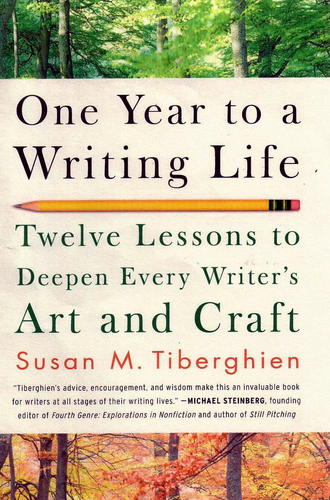
A reminder that the next 500-word challenge is open. Write up to 500 words around the theme ‘spotlight’ and send them to waxings.blog@gmail.com by midnight 4 March 2011, Australian Western Standard Time (GMT+8). The winner will receive One Year To A Writing Life: Twelve Lessons to Deepen Every Writer’s Art and Craft by Susan Tiberghien.

***

Judge’s comments:

I love the way people more often than not find the night something filled with regret, pain, nostalgia and requisite amounts of darkness. Yet it’s also a place filled with so many interesting characters which can be simple, complex, exactly what you see or a total illusion. This selection was interesting because of the numerous pieces offering a twisty finish, which is why Home is Where the Heart Is was my favourite. Just when I thought it was going to be a wistful love story and one of returning home to a changed place, the mention of a shaky trigger finger sent it off in a whole new direction. I could see Edgar so clearly – the rocking chair, the porch and the night. Oddly poor Edgar’s end seemed quite calm as were the elements which surrounded him.

Posted in 500-word challenge, Blogwax | Tagged , , , , , , , , , | 3 Comments

Birthday

Happy Birthday to Waxings Wiz Carina Tan Van Baren!

Posted in Blogwax | 1 Comment

And the 500-word challenge for February is…


…‘spotlight’.  Write up to 500 words around the theme ‘spotlight’ and send them to waxings.blog@gmail.com by midnight 4 March 2011 Australian Western Standard Time (GMT+8).

You’ll be in the running to win One Year To A Writing Life: Twelve Lessons to Deepen Every Writer’s Art and Craft by Susan Tiberghien and the glory of being only the third winner of the Waxings 500-word challenge.

Not bad for a free competition huh?

Our guest judge is now poring over the entries for January’s ‘night’ challenge and I don’t envy her job one little bit. Again, the entries were diverse and very creative takes on the theme and all skilfully rendered. It’s going to be difficult to pick a winner.

Thanks to the Waxers who have already taken the 500-word challenge. You’re a talented mob and I hope you continue to play. To everyone else, take a moment to check out the ‘night’ entries, then get cracking on ‘spotlight’! I’m looking forward to seeing what you do with it.

And just a quick reminder when you visit the site:

Waxings is all about sharing our work, getting feedback and providing encouragement to each other. Please have a read through some of the material in whatever category interests you and tell us what you think.

Was it written well? Was the story/poem compelling? What was your reaction? Would you like to read more? All constructive suggestions and advice welcome. Even just a quick click on ‘like’ if you thought it was good but can’t think of anything specific to say. It all helps.

***

Other writing competitions

The following opportunities have been forwarded by Waxings subscribers.

If you know of other writing competitions or any opportunities/resources that might be of interest to fellow subscribers, please contact us at waxings.blog@gmail.com

Posted in 500-word challenge, Blogwax | Tagged , , , , , | Leave a comment